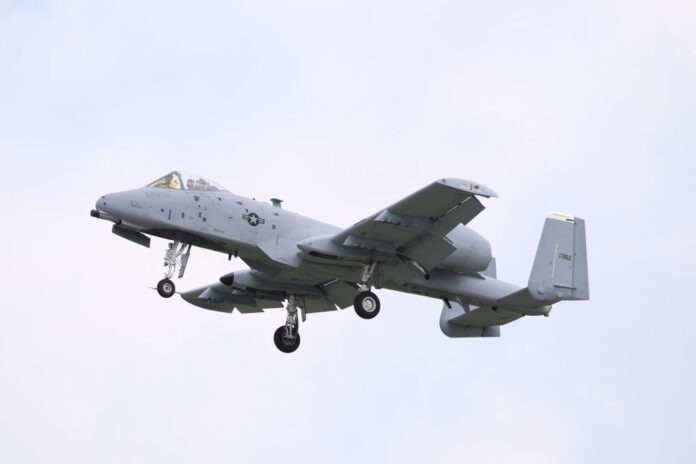
Governments are committing hundreds of billions of dollars to military modernisation, creating opportunities for aerospace manufacturers, weapons suppliers, drone developers, cybersecurity businesses and satellite operators. But can a prolonged rearmament cycle deliver lasting profits for investors, or are markets already pricing in years of growth?
For much of the period following the end of the Cold War, governments in Europe and elsewhere operated on the assumption that the risk of a major military confrontation had diminished. Defence budgets came under pressure, procurement programmes were stretched across decades, and some countries allowed their military equipment and industrial capacity to deteriorate.
That era is giving way to something very different.
Russia’s war against Ukraine, rising tensions between China and the United States, instability in the Middle East, attacks on shipping and the growing importance of cyberwarfare have forced governments to reconsider the cost of national security. Military readiness is once again a central political priority, and countries that spent years limiting defence expenditure are now discussing how to rebuild their armed forces and industrial capabilities.
The financial implications are substantial.
According to the Stockholm International Peace Research Institute (SIPRI), global military expenditure reached approximately $2.89 trillion in 2025, an increase of 2.9% in real terms. Spending had risen for eleven consecutive years, with global expenditure up 41% over the preceding decade.
The shift is particularly pronounced in Europe. The European Union estimates that member states’ defence expenditure will reach €454 billion in 2026, approximately 75% above its 2021 level. Planned defence investment is also increasing sharply, including spending on equipment and research and development.
These figures represent more than an increase in government expenditure. They signal a possible structural change in the global economy, with capital flowing towards industries that spent years operating under very different assumptions about future demand.
For investors, the opportunity appears straightforward: if governments buy more military equipment, defence companies should benefit.
But the reality is more complicated. Defence businesses operate under unusual commercial conditions, where governments are often their largest customers, contracts can run for decades, technology programmes can overrun their budgets, and political decisions can transform a company’s prospects almost overnight.
The rearmament boom could produce substantial long-term winners. It could also leave investors paying too much for companies whose future profits depend on political promises that have not yet become actual orders.
The key is understanding where the money is going, how defence companies earn their returns, and what might interrupt the cycle.
1. Why governments are spending again
The rearmament cycle has several drivers, and understanding them helps determine whether higher spending is likely to persist.
The first is the deterioration of the international security environment. European governments are rebuilding capabilities after years of comparatively limited investment, while countries in the Indo-Pacific are responding to a more contested regional balance of power. Elsewhere, conflicts have demonstrated the importance of missile defence, ammunition supplies and the ability to replace equipment quickly.
The second is the depletion of existing stockpiles. Weapons and ammunition supplied to countries at war must be replaced if donor nations want to maintain their own readiness. Rebuilding those inventories creates demand for new production, even if the wider geopolitical situation eventually stabilises.
The third is a change in alliance expectations. At the June 2025 NATO summit in The Hague, members committed to spending 5% of GDP annually on core defence and related security requirements by 2035. The commitment comprises at least 3.5% for core defence and up to 1.5% for broader security-related investment.
These targets are politically significant, but investors should not mistake a long-term spending commitment for an immediate purchase order. Governments still need budgets, procurement approvals, industrial capacity and workable contracts.
Nevertheless, the direction of travel is clear: defence is becoming a larger and more strategically important part of government spending.
The European Union’s projected €163 billion in defence investment for 2026, up substantially from 2021, illustrates the scale of the change. Equipment procurement represents the largest component of that investment.
For manufacturers, the potential opportunity extends beyond a single year of higher sales. If governments decide that their armed forces need larger inventories, more resilient supply chains and modern equipment over the next decade, they may create a prolonged cycle of orders, upgrades and maintenance.
The critical uncertainty is how much of that planned spending will actually be delivered.
2. The traditional defence giants: aircraft, missiles and ships
The most established beneficiaries of rearmament are the large contractors that manufacture sophisticated military platforms.
Companies such as Lockheed Martin, RTX, Northrop Grumman, BAE Systems and Rheinmetall operate across different parts of the defence industry, from aircraft and missile systems to naval technology, ammunition and land-based equipment.
Their advantage is difficult for new entrants to reproduce. They possess specialist engineering teams, established production facilities, relationships with government customers, security clearances and experience managing complex programmes.
Military equipment also creates business beyond the initial sale. Aircraft require spare parts, maintenance, software updates and upgrades. Missile systems require replacement inventories. Ships need servicing and modernisation. Defence electronics must be supported throughout the operational life of a platform.
This creates the potential for recurring revenue over many years.
A manufacturer that wins a major programme may therefore gain more than a one-off contract. It may establish a long-term relationship with a government customer and secure follow-on business.
The recent replenishment cycle illustrates the opportunity. In October 2026, Reuters reported that RTX’s Raytheon had received a US contract worth up to $6.3 billion for Standard Missile-3 Block IB interceptor production and sustainment, reflecting efforts to rebuild missile-defence inventories.
Such contracts can support production planning and encourage companies to expand capacity.
But the headline contract value is not equivalent to immediate profit. Work may be delivered over several years, revenue may be recognised progressively, and costs can rise during production. A company can win a large contract and still underperform financially if execution is poor.
Investors must also consider how much growth the market has already priced into the share price. A strong business is not necessarily an attractive investment at every valuation.
3. Drones and autonomous systems: a new defence economy
One of the most important changes in modern warfare is the growing importance of relatively inexpensive unmanned systems.
Drones can provide surveillance, reconnaissance, communications and other military capabilities without putting a human pilot aboard the aircraft. Their relatively low cost can allow forces to deploy large numbers of systems, while advances in autonomy and software are expanding their potential applications.
The financial implications are significant.
Traditional military platforms can take years to develop and cost enormous sums. Some drone systems can be developed and manufactured much more quickly, creating opportunities for smaller technology companies alongside established defence contractors.
The emerging market includes drone manufacturers, sensor suppliers, navigation systems, communications equipment, autonomy software and counter-drone technology.
Counter-drone systems are particularly important because the spread of inexpensive unmanned aircraft creates demand for methods of detecting, tracking and responding to them. Defence forces need integrated systems that can distinguish potential threats and coordinate responses across different sensors and platforms.
Recent investment activity reflects this shift. In October 2026, Reuters reported that the NATO Innovation Fund was directing attention towards counter-drone technology and space-based surveillance, with Ukraine’s experience helping reshape defence priorities.
However, drones do not simply replace traditional military equipment. Modern armed forces still require aircraft, ships, missiles, radar, logistics and secure communications. Unmanned systems must operate within a much larger defence network.
For investors, the challenge is identifying businesses that can convert promising technology into reliable products that governments are prepared to purchase at scale.
A small company might develop an impressive prototype without possessing the manufacturing capacity, regulatory approvals or financial resources required to fulfil a major order. Conversely, a traditional contractor may use its established production and government relationships to expand into newer technologies.
The winners may therefore include both innovative newcomers and incumbents capable of adapting.
4. Cybersecurity and electronic warfare: the invisible battlefield
Modern military capability depends on far more than physical weapons. Armed forces rely on secure communications, digital command systems, logistics networks, satellite links and vast quantities of data.
That dependence creates vulnerabilities.
Cyberattacks can disrupt government networks, military communications and critical infrastructure. Electronic warfare can interfere with communications, navigation and radar. Sophisticated adversaries may seek to compromise systems before a conflict begins, making cybersecurity and resilience essential elements of national defence.
This opens opportunities for specialist cybersecurity providers, defence software companies, electronic warfare manufacturers and suppliers of secure communications equipment.
Unlike some traditional weapons programmes, software-based capabilities may require frequent updates as threats evolve. That can create recurring revenue opportunities through support agreements, subscriptions and ongoing system upgrades.
However, defence cybersecurity is not identical to the commercial cybersecurity market. Government customers may impose stringent security requirements, restrict access to sensitive information and require suppliers to operate within classified environments.
Companies must also demonstrate reliability. A product that performs well in ordinary commercial settings may not automatically satisfy military requirements.
Investors should examine whether a cybersecurity business has genuine defence contracts, whether those contracts are recurring, and how much revenue depends on a small number of government customers.
The sector offers exposure to an increasingly important part of military spending, but rapid technological change and intense competition can make long-term profitability difficult to predict.
5. Satellites and space: the strategic high ground
9
Space has become an essential part of modern defence. Satellites support communications, navigation, missile warning, intelligence gathering and battlefield surveillance. Without reliable access to space-based systems, many advanced military capabilities would be significantly less effective.
Governments are therefore investing in more resilient satellite networks, secure communications and systems capable of operating when individual satellites or ground stations are disrupted.
This creates opportunities for aerospace manufacturers, satellite operators, launch providers, specialist electronics companies and businesses developing space-based intelligence systems.
The sector also blurs the boundary between commercial and military technology. Satellite networks originally developed for civilian communications may provide services to armed forces, while commercial imagery can supplement traditional intelligence capabilities.
For investors, this creates a potentially attractive market where government contracts can combine with commercial revenue.
But satellite programmes also demonstrate the dangers of defence procurement. They are technically complex, capital-intensive and vulnerable to delays caused by component shortages, integration problems and changing requirements.
Britain’s planned SkyNet 6 military communications satellite programme illustrates these competing considerations. The programme involves questions of domestic industrial capability, foreign technology dependencies and the government’s desire to retain strategic control over essential systems.
The underlying lesson is that national security can influence which supplier wins a contract just as strongly as price or technical performance. That can create opportunities for domestic manufacturers, but it can also restrict the market available to them.
6. How government defence contracts actually work
For investors, understanding procurement is just as important as understanding the technology.
Unlike ordinary consumer businesses, defence contractors often compete for large contracts that specify particular capabilities, delivery schedules, technical requirements and support obligations.
The process typically involves several stages.
- Budget approval. A government allocates money to a defence programme, but funding may be spread across several years and remain subject to legislative approval.
- Tender and selection. Suppliers submit proposals covering technical performance, price, delivery schedules, security and industrial requirements. Some contracts are competitively tendered; others may be negotiated with a limited number of suppliers.
- Development and testing. New equipment may require years of engineering, trials and certification before full production begins. Development contracts can carry substantial cost and schedule risks.
- Production and delivery. The manufacturer produces equipment according to the agreed terms. Payments and revenue recognition depend on the contract structure and delivery milestones.
- Maintenance and upgrades. After delivery, the supplier may earn additional revenue from spare parts, repairs, training, software upgrades and long-term support.
The contract structure matters enormously.
Under a fixed-price contract, a supplier generally accepts greater responsibility for cost overruns. If production becomes more expensive than expected, the contractor’s profit can shrink.
Under a cost-reimbursement arrangement, eligible costs may be reimbursed under agreed terms, often with a negotiated fee. This can reduce some cost risk for the contractor, but it does not eliminate the possibility of disputes, performance problems or changes in funding.
Investors should also distinguish between a contract’s announced maximum value, its funded amount and the revenue the company has actually earned. These figures can be very different.
A large headline award may cover a long period, include optional future orders or depend on subsequent appropriations. It should not be treated as guaranteed revenue in full.
Government contracts can provide unusual commercial advantages: large customers, long planning horizons and barriers to entry. Yet they are not equivalent to risk-free income.
7. What happens when political priorities change?
Defence companies operate in a market where their largest customers can change their minds.
An election may bring a different approach to foreign policy. A government may prioritise domestic manufacturing, redirect funding towards a different weapons system or cancel a programme that no longer fits its strategic objectives.
Even when defence budgets increase overall, spending can move between categories. More money for drones, cyber capabilities or missile defence does not guarantee proportionate growth for every aircraft, shipbuilding or traditional weapons programme.
The consequences can be severe for companies heavily exposed to a single contract or customer.
A programme cancellation may leave a manufacturer with specialised facilities, expensive engineering teams and suppliers that have already invested in production. If alternative customers cannot be found, some of those costs may be difficult to recover.
Export controls create another complication. A company may develop an excellent product but be unable to sell it to a particular foreign customer because of national security restrictions or diplomatic considerations.
Governments can also demand local manufacturing, technology transfer or domestic supply chains. Such requirements may create new opportunities but can increase costs and complicate international partnerships.
This is why defence investors should examine not only the size of a company’s order book, but also its composition.
Important questions include:
- How much revenue comes from the largest customer?
- How much of the order book is funded and contractually committed?
- When are deliveries and payments expected?
- Can production expand without excessive cost increases?
- Does the business depend on a single major programme?
- Could a change in government or strategic priorities undermine demand?
The answers help distinguish companies with diversified, durable revenue from those whose fortunes depend on one political decision.
8. Can the rearmament boom transform stock markets?
The investment implications extend well beyond a handful of famous defence companies.
Established contractors may benefit from replenishment orders, maintenance revenue and long-term modernisation programmes. Smaller suppliers may gain from demand for sensors, electronics, propulsion, communications and specialist manufacturing. Cybersecurity and satellite businesses may attract investment as governments seek more resilient digital and space infrastructure.
Yet a rising industry does not automatically produce rising share prices.
Markets look forward. If investors already expect years of higher spending, defence stocks may trade at valuations that assume substantial growth and successful contract execution. Companies can report strong results and still disappoint shareholders if their performance falls short of those expectations.
There is also a macroeconomic trade-off. Governments must finance rearmament through some combination of taxation, borrowing, spending reallocations and economic growth. The International Monetary Fund has warned that sustained defence spending increases can worsen fiscal deficits and public debt, with additional inflationary pressures and external imbalances in some countries.
That matters because higher borrowing costs can affect stock valuations across the market, including defence companies themselves.
The most durable investment opportunities may therefore be found in businesses that combine growing demand with strong execution, diversified customers, manageable capital requirements and attractive cash generation.
Conclusion: a long-term shift, not a guaranteed bull market
The global rearmament boom reflects a genuine change in the international security environment. Governments are rebuilding military inventories, modernising equipment and investing in capabilities that were previously given less attention.
That creates a credible foundation for long-term demand across aerospace, missiles, drones, cybersecurity, satellites and defence electronics.
But the investment case rests on more than rising budgets. Contractors must convert political commitments into funded orders, deliver equipment on time and earn acceptable returns. Technology companies must demonstrate that their products can move from prototypes into reliable, scalable systems. Investors must also consider valuations, political risk and the possibility that spending priorities will change.
The biggest winners may not necessarily be the companies producing the most expensive weapons. They could include businesses providing essential components, software, communications and maintenance that remain necessary across multiple generations of military equipment.
Ultimately, rearmament can transform parts of the stock market, but higher defence spending is an opportunity rather than a guarantee of profit. The strongest businesses will be those capable of turning a changing geopolitical landscape into sustainable revenue, disciplined investment and long-term cash flow.

