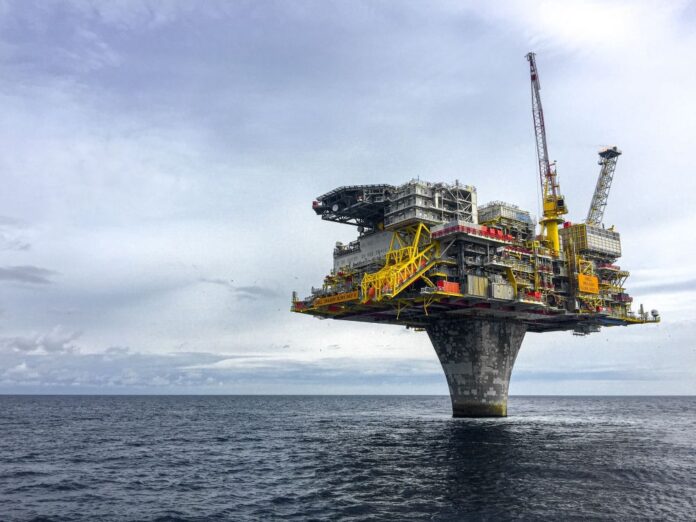
Energy is one of the most politically sensitive and economically important industries in the world. Oil prices influence transport costs, inflation and the profitability of thousands of businesses. Natural gas heats homes, generates electricity, supports industrial production and supplies the chemical industry. Together, oil and gas remain fundamental to the operation of the modern economy.
For investors, the sector offers a distinctive combination of opportunities. Energy companies can generate substantial cash flow when commodity prices rise, distribute dividends and repurchase shares. Some also operate refineries, chemical plants, trading businesses and liquefied natural gas (LNG) infrastructure, giving them several sources of earnings.
Yet oil and gas are cyclical industries. Prices can rise sharply during supply disruptions and fall when demand weakens or production increases. Companies must also invest heavily to maintain existing fields, develop new resources and manage the environmental and regulatory consequences of their operations.
The political situation makes the outlook especially complicated. As of 14 October 2026, conflict in the Middle East is disrupting energy supplies and shipping, pushing oil prices higher while simultaneously threatening economic growth and fuel demand. The resulting market is being shaped by two competing forces: immediate shortages and geopolitical risk on one side, and the possibility of weaker demand and recovering supply on the other.
This article examines the political and economic forces shaping oil and gas prices before analysing five major companies: ExxonMobil, Chevron, Shell, TotalEnergies and ConocoPhillips. Each has a different business model, geographic exposure and approach to capital investment. The aim is to explain their financial characteristics and investment risks without recommending any particular security.
The Oil Market: Politics, Supply and Global Demand
Oil is traded in a global market, but production and consumption are concentrated in different regions. This creates an international system in which events in one country can affect prices everywhere.
Brent crude is a major international benchmark, while West Texas Intermediate (WTI) is an important US benchmark. Their prices reflect expectations about supply, demand, inventories, transport costs and the availability of particular grades of crude.
The market is particularly sensitive to the Middle East because the region contains major producers and critical shipping routes.
The Strait of Hormuz and the current geopolitical crisis
The Strait of Hormuz, between Iran and Oman, is one of the world’s most important energy chokepoints. A substantial share of internationally traded oil and LNG normally passes through it, connecting Gulf producers with customers in Asia and elsewhere.
Conflict involving Iran and other regional actors has disrupted shipping and energy infrastructure in 2026. Attacks on regional facilities and vessels have raised concerns about whether oil and gas can reach international markets reliably.
On 14 October, Brent crude futures rose to approximately US$105.83 per barrel, while WTI reached US$94.71, following renewed attacks on Saudi energy infrastructure and escalating tensions around regional shipping. The market was also considering the limited effect of a temporary US easing of sanctions on Russian fuels. (Reuters, 14 October 2026)
The immediate concern is straightforward: if production facilities are damaged or tankers cannot move safely, less oil may reach consumers. Buyers may then compete for available supplies, lifting prices and freight costs.
But a geopolitical premium can be temporary. If shipping routes reopen, damaged facilities return to service and exports recover, prices could fall quickly. Oil prices can also decline if expensive energy reduces consumption or triggers an economic slowdown.
For energy companies, the effects are not uniform. Producers with accessible output may benefit from higher prices, while companies dependent on disrupted facilities can lose production. Refiners and trading businesses may face higher feedstock costs, shipping expenses and unpredictable product margins.
OPEC+, US production and the supply response
The Organization of the Petroleum Exporting Countries and its partners, commonly called OPEC+, influence the market through production policy. Their decisions can affect how much oil reaches consumers, although compliance, spare capacity and geopolitical disruptions all matter.
The United States is another major influence. Its shale industry can respond to price signals, but new drilling and production growth take time and depend on capital discipline, equipment availability and pipeline capacity.
Higher prices can encourage producers to increase output. Over time, additional supply may reduce the shortage premium that initially pushed prices higher.
The opposite can happen when companies cut investment during a period of low prices. Declining production from existing fields can eventually tighten supply if new projects fail to replace it.
This creates a recurring cycle: low prices discourage investment, tighter supply supports prices, high prices encourage new production, and the resulting supply growth can put downward pressure on the market again.
What Do Analysts Expect for Oil Prices?
The current market illustrates why oil forecasts can differ substantially. Some forecasters focus on immediate supply disruptions; others place greater emphasis on economic demand, production recovery and the possibility of a future surplus.
The International Energy Agency (IEA), the US Energy Information Administration (EIA) and OPEC use different assumptions about economic growth, supply availability and how consumers respond to higher prices. Their forecasts should therefore be treated as scenarios rather than promises.
The IEA’s October 2026 Oil Market Report projects that global oil demand will fall by an average of 2.6 million barrels per day in 2026, with a further sharp year-on-year decline expected in the fourth quarter. It attributes the deterioration to the Iran conflict, restricted product availability, soaring fuel prices and weaker economic conditions. The report also warns that the recovery in Middle Eastern supply remains fragile. (IEA, Oil Market Report, October 2026)
The EIA’s October outlook takes a somewhat different approach to the path of prices. It expects oil prices to remain elevated while supply constraints persist, but forecasts that Brent will ease as alternative export routes and restored production help replenish inventories. Its outlook places Brent around US$87 per barrel by the second quarter of 2027 and projects further easing later in the year if supply recovers. (EIA, Short-Term Energy Outlook, October 2026)
These projections reflect different assumptions, but their shared message is important: today’s elevated prices do not necessarily represent the market’s long-term equilibrium.
Three broad scenarios help frame the outlook.
A prolonged supply crisis: Continued attacks, damaged infrastructure or restricted shipping keep oil supplies tight. Prices could remain elevated or rise further, benefiting some producers while increasing costs for refiners, consumers and energy-intensive businesses.
A gradual recovery: Shipping normalises, disrupted production returns and inventories begin rebuilding. Prices could retreat from crisis levels even if demand remains reasonably stable.
A deeper demand shock: High fuel prices, inflation and weaker economic activity reduce consumption. If demand falls faster than supply, oil prices could decline substantially, putting pressure on producers’ margins and planned investment.
The timing matters as much as the destination. A company may report exceptional earnings during a supply crisis, but investors must still assess whether those earnings are sustainable once market conditions normalise.
Natural Gas: A Different Market With Its Own Risks
Oil and natural gas are often grouped together, but their markets operate differently.
Oil is highly internationally traded, while natural gas historically depended more heavily on regional pipeline networks. LNG has changed this by allowing gas to be cooled into liquid form, transported by ship and regasified at its destination.
This has created a more interconnected global gas market, but infrastructure constraints remain important. Liquefaction plants, LNG carriers, regasification terminals and pipelines all influence how quickly supplies can move between regions.
The Middle East crisis has affected LNG as well as crude oil. The IEA’s third-quarter 2026 Gas Market Report identified the disruption to LNG flows through the Strait of Hormuz as a major supply shock. The route had accounted for almost one-fifth of global LNG supply, while additional production from North America, Africa and other regions helped offset part of the lost Gulf supply. (IEA, Gas Market Report Q3 2026)
Natural gas prices consequently depend on regional conditions. US Henry Hub prices are influenced by domestic production, storage, weather and LNG export demand. European and Asian gas prices are more directly exposed to international LNG availability and competition between importers.
The outlook also depends on new LNG capacity. Additional projects can increase global supply and moderate prices, but delays, technical problems or prolonged disruptions in the Gulf could keep markets tight.
For investors, this distinction is important. A company with substantial LNG trading, liquefaction and marketing operations may experience different earnings dynamics from a producer that primarily sells gas into a domestic pipeline market.
Investing in Energy Companies: Understanding the Business Models
Not all oil and gas companies are alike. The five businesses examined below fall into two broad categories.
Integrated energy companies operate across multiple stages of the energy supply chain. They may produce oil and gas, refine crude into fuels, manufacture chemicals, trade commodities and sell energy products to customers. ExxonMobil, Chevron, Shell and TotalEnergies have substantial integrated operations.
Exploration and production companies, often called E&P companies, focus more heavily on finding and extracting oil and gas. ConocoPhillips is a major example.
Integration can help diversify earnings. When crude prices rise, upstream production may benefit, while refining businesses can face higher feedstock costs. When oil prices fall, cheaper crude may support some refining margins even as upstream profits decline. The outcome depends on the specific market conditions and the company’s operations.
E&P companies tend to have more direct exposure to the prices they receive for their production. This can make their earnings particularly sensitive to oil and gas prices.
Investors commonly examine several financial measures:
- Production volumes: How much oil and gas does the company produce, and how reliable is that output?
- Realised prices: What prices does the company actually receive after contractual differences, regional discounts and other adjustments?
- Operating costs: How expensive is it to produce each barrel of oil equivalent?
- Free cash flow: How much cash remains after operating expenses and capital investment?
- Capital expenditure: How much must the company spend to maintain production and develop future projects?
- Debt and shareholder distributions: Can the company support dividends and buybacks through a weaker commodity cycle?
- Valuation: How much are investors paying for the company’s expected future earnings and cash flow?
The companies below offer different ways to examine these factors.
ExxonMobil: Scale, Integration and Long-Life Projects
ExxonMobil is one of the world’s largest integrated energy companies. Its operations span oil and gas production, refining, chemicals, fuels and energy-related technologies.
Its upstream business has significant exposure to crude oil and natural gas prices. Meanwhile, refining and chemical operations can generate earnings from different market conditions, although they are not guaranteed to offset weakness in production.
ExxonMobil’s portfolio includes major operations in the Permian Basin in the United States and offshore Guyana, as well as significant interests in natural gas and LNG projects. Guyana has become particularly important because of its substantial offshore resource base and continuing development programme.
In the second quarter of 2026, ExxonMobil reported earnings of US$14.5 billion, adjusted earnings of US$14.7 billion and free cash flow of US$17.2 billion. The company also reported record Permian production and progress towards bringing additional Guyana production capacity online. (ExxonMobil’s second-quarter 2026 results)
The results demonstrate the cash-generating potential of a large integrated company during a period of elevated energy prices. However, reported results also reflected an unusually volatile environment, and Reuters reported that adjusted earnings were below analyst expectations despite reaching a four-year high. (Reuters, 31 July 2026)
ExxonMobil’s investment profile depends on its ability to maintain reliable production, deliver large projects on budget and generate sufficient returns from its capital spending. Its exposure to global LNG markets and politically sensitive regions also creates risks.
For investors analysing ExxonMobil, the key questions include the durability of its production growth, the economics of its major projects, its capital discipline and how well its integrated operations perform if oil prices fall.
Chevron: Production Growth and a Broad Energy Portfolio
Chevron is another major US-based integrated energy company. It produces oil and natural gas, operates refineries and chemical businesses, and markets fuels and other energy products.
Its portfolio includes the Permian Basin, offshore production in the Gulf of America, and significant interests in Kazakhstan and other international operations. The acquisition of Hess has also expanded Chevron’s exposure to Guyana’s offshore oil development.
Chevron’s second-quarter 2026 results showed how production growth and high commodity prices can influence earnings. The company reported adjusted earnings of approximately US$12.0 billion, record US production and worldwide production that increased 20% from the previous year. It also reported record refinery throughput in the United States. (Chevron’s second-quarter 2026 results)
The company’s scale and integrated structure provide several sources of revenue, but its financial performance remains sensitive to commodity prices, refining margins and project execution.
A key consideration is the balance between growth investment and shareholder distributions. Large projects can create additional production and future cash flow, but they require significant upfront spending and may take years to deliver their expected returns.
Chevron also faces geopolitical risks across its international portfolio, alongside the ordinary operational risks associated with large oilfields and refineries.
Investors examining Chevron may focus on production growth, the integration of acquired assets, the performance of major projects, debt levels and the company’s ability to support dividends and share repurchases across a full commodity cycle.
Shell: LNG, Global Trading and Integrated Energy
Shell is a British-headquartered integrated energy company with substantial operations in natural gas, LNG, oil production, refining, chemicals and energy marketing.
LNG is particularly important to Shell’s business model. The company operates across the LNG supply chain, from gas production and liquefaction to shipping, trading and customer sales. This creates opportunities to benefit from differences in regional prices and changing demand, although trading performance and margins can be volatile.
Shell’s second-quarter 2026 results demonstrated the importance of this model during a period of disruption. It reported adjusted earnings of US$9.8 billion and cash flow from operations of US$21.4 billion. The company attributed its performance to strong operations across its businesses and additional value captured through LNG trading and optimisation. (Shell’s second-quarter 2026 results)
Shell’s diversified operations can create resilience, but the company remains exposed to disruptions in major producing regions and international shipping. LNG infrastructure also requires substantial investment, while trading earnings can change sharply as market conditions shift.
Another consideration is the company’s allocation of capital between traditional oil and gas, LNG, shareholder distributions and lower-carbon energy businesses. Different investment priorities may affect future earnings and the company’s exposure to changes in energy policy.
For investors, Shell’s profile is closely connected to LNG demand, global gas-price differences, trading performance, upstream production and its ability to maintain strong cash generation through volatile markets.
TotalEnergies: Integrated Energy With a Broad Geographic Footprint
TotalEnergies is a French integrated energy company with operations spanning oil and gas production, LNG, refining, chemicals, electricity and renewable energy.
Its business has significant exposure to international oil and gas prices, but its integrated structure means that the relationship between commodity prices and overall earnings is not straightforward. Production profits may rise during an oil rally, while refining, marketing and trading businesses experience different effects.
The company’s geographic footprint includes operations in Europe, Africa, the Middle East, the Americas and other regions. This provides access to multiple energy markets, while also exposing the company to political, regulatory and security risks.
TotalEnergies reported adjusted net income of approximately US$4.2 billion in the second quarter of 2026. The company also reported that the Middle East conflict affected its production by an average of around 210,000 barrels of oil equivalent per day during the quarter. It estimated that the conflict’s impact could represent 5% to 10% of total production, depending on conditions in the Strait of Hormuz and the ability to export output. (TotalEnergies’ second-quarter and first-half 2026 results)
These figures illustrate an important point: higher prices do not necessarily compensate for lost production. If a company cannot produce or export its output, it may be unable to capture the full benefit of higher market prices.
TotalEnergies’ investment profile also reflects its commitment to electricity and renewable energy. These businesses could diversify future earnings, but they have different cost structures, regulatory requirements and return profiles from conventional oil and gas production.
Investors examining TotalEnergies may focus on production recovery, LNG exposure, capital allocation, project economics and the balance between conventional energy and electricity-related investments.
ConocoPhillips: Direct Exposure to Oil and Gas Production
ConocoPhillips differs from the integrated majors because its business is primarily focused on exploration and production rather than operating a large global refining and fuel-marketing network.
The company has major operations in the United States, including the Lower 48, Alaska and other regions, as well as international production and LNG-related interests. Its portfolio includes conventional oil and gas, shale resources and longer-life projects.
This structure gives ConocoPhillips relatively direct exposure to the prices it receives for its oil and gas. When commodity prices rise, higher realised prices can support revenue and margins. When prices fall, there are fewer downstream businesses to potentially offset the impact.
In the second quarter of 2026, ConocoPhillips reported earnings of US$3.9 billion, adjusted earnings of US$4.0 billion and cash provided by operating activities of US$7.4 billion. Its average realised price was US$62.33 per barrel of oil equivalent, 36% higher than a year earlier. (ConocoPhillips’ second-quarter 2026 results)
The company has also been expanding its LNG offtake portfolio and pursuing opportunities to improve its resource base. These activities can broaden its access to global gas markets, but they also introduce contractual, geopolitical and project-related risks.
For investors, ConocoPhillips raises a different set of questions from the integrated majors. Production costs, resource quality, realised prices, reserve life and capital discipline are particularly important. Its earnings can be more sensitive to commodity-price movements, which may create stronger cash generation in favourable markets but greater pressure during downturns.
The company’s ability to maintain competitive production costs and avoid overcommitting capital during periods of high prices will influence its performance over the long term.
Comparing the Five Companies
The following comparison highlights the main differences in their business models.
| Company | Business profile | Key factors to examine |
|---|---|---|
| ExxonMobil | Large integrated producer with refining, chemicals and major upstream projects | Guyana and Permian growth, capital expenditure, production reliability and project economics |
| Chevron | Integrated energy company with substantial US and international production | Production growth, acquired assets, project delivery and shareholder distributions |
| Shell | Integrated energy company with major LNG and trading operations | LNG margins, trading performance, production reliability and capital allocation |
| TotalEnergies | Integrated energy company spanning oil, gas, LNG, electricity and renewables | Production recovery, regional exposure, LNG, project returns and energy-transition investments |
| ConocoPhillips | Primarily an exploration and production company | Realised prices, production costs, reserve quality, cash flow and capital discipline |
This is not a ranking. It illustrates why the five companies may respond differently to the same change in oil or gas prices.
A sharp rise in crude prices may boost an upstream producer’s earnings, but it can also raise the cost of crude for refiners. A global LNG trader may benefit from regional price differences, but shipping disruptions can prevent it from moving cargoes. An E&P company may have less diversification than an integrated major, but its financial performance can be more directly connected to commodity prices.
The Risks Investors Need to Understand
Oil and gas companies face several shared risks.
Commodity-price volatility: Oil and gas prices can change rapidly in response to economic data, inventories, production policy and geopolitical events. A company reporting exceptional earnings during a crisis may earn considerably less when conditions normalise.
Political and regulatory uncertainty: Governments can change royalties, taxes, sanctions, environmental requirements and access to resources. International companies may be affected by several legal and political systems simultaneously.
Capital intensity: Exploration, drilling, offshore platforms, pipelines, LNG facilities and refineries require substantial investment. Projects may suffer delays, cost overruns or disappointing production.
Energy demand and substitution: Efficiency improvements, electrification, renewable energy and changing industrial patterns may influence long-term demand. The pace varies by region and application, and oil and gas are likely to remain important in different ways across the global economy.
Balance-sheet risk: Companies that borrow heavily or commit to large investment programmes may become vulnerable when commodity prices fall.
Valuation risk: High energy prices can increase investor enthusiasm for the sector. But if share prices already reflect unusually strong earnings, a subsequent fall in prices can lead to disappointing returns even when companies remain profitable.
Investors should also distinguish between accounting earnings and sustainable free cash flow. One-off asset sales, working-capital movements and changes in commodity inventories can affect reported figures, while the cost of replacing depleted reserves remains a long-term requirement.
Conclusion: Energy Profits in an Uncertain World
Oil and gas companies remain central to the global economy, but their investment outlook is shaped by competing forces.
The current Middle East crisis has demonstrated how quickly geopolitical events can disrupt supply, raise transport costs and push oil prices higher. Yet the outlook is not simply a story of permanent scarcity. The IEA warns that high prices and weaker economic conditions are reducing demand, while the EIA expects prices to ease as supply routes and production recover.
Natural gas introduces additional complexity. LNG has made gas markets more interconnected, but infrastructure constraints and regional differences remain important. Companies with major LNG operations may therefore experience different earnings patterns from businesses that concentrate primarily on crude oil production.
ExxonMobil, Chevron, Shell and TotalEnergies operate integrated energy businesses, although their geographic exposure, project portfolios and LNG operations differ. ConocoPhillips offers a more direct exploration-and-production model, with financial performance more closely tied to the prices it receives for its output.
Each company must be assessed on its production, costs, investment requirements, debt, capital allocation and valuation—not simply on whether oil prices are rising.
The most useful questions are threefold: How might oil and gas prices evolve as the political situation changes? Can each company generate sustainable free cash flow across a full commodity cycle? And how much of that future performance is already reflected in its share price?
The answers will depend on geopolitical developments, supply recovery, economic growth, energy demand and company-specific execution. A period of high prices can create substantial profits, but it does not automatically make every energy company an attractive investment.

