Oil has a remarkable ability to turn a distant geopolitical crisis into an immediate financial problem for households and businesses around the world.
A conflict in an oil-producing region can push up the price of crude within hours. Within days, financial markets begin reassessing inflation forecasts, energy companies adjust their expectations, airlines face higher fuel bills and investors reconsider the outlook for interest rates. Over the following months, the consequences can spread through freight networks, food production, manufacturing and consumer spending.
That chain reaction is becoming increasingly important as global energy markets respond to heightened geopolitical tensions.
On 12 October 2026, Brent crude rose above $106 a barrel, reaching approximately $106.52, as attacks in Saudi Arabia and wider regional instability raised concerns about potential supply disruptions. The movement also renewed concerns that higher energy costs could complicate the outlook for inflation and monetary policy.
The immediate question is whether oil prices will remain elevated or retreat as the geopolitical situation changes. The more consequential question is what happens if expensive energy becomes a persistent feature of the global economy.
Oil is not simply another commodity. It is an essential input into transportation, agriculture, manufacturing and international trade. When its price rises sharply, the effects can spread through almost every part of the economic system.
For investors, businesses and households, the danger is that an energy shock could arrive at a time when inflation remains difficult to control. If higher fuel costs feed into the prices of other goods and services, central banks may be forced to keep interest rates higher for longer, even as economic growth weakens.
The result could be an uncomfortable combination: slower growth, persistent inflation and financial markets struggling to determine which risk matters most.
Why oil prices are rising
Oil prices respond to the balance between supply and demand, but that balance is heavily influenced by expectations about the future.
When traders believe that a conflict could interrupt production or shipping, they may bid up prices before a physical shortage develops. Energy markets incorporate the possibility of disruption, not just the amount of oil currently available.
The latest rise illustrates this mechanism. Attacks in Saudi Arabia and continuing uncertainty around the wider Middle East increased concerns about the security of regional energy supplies. The Strait of Hormuz is particularly important because it provides a major shipping route for oil and other energy products from the Persian Gulf.
A prolonged interruption to shipments could force buyers to compete for supplies from elsewhere, increasing transport costs and placing additional pressure on global prices.
However, geopolitical risk is only one side of the equation. Oil prices also depend on production decisions, commercial inventories, economic growth and the availability of alternative supplies.
If producers increase output, shipping routes remain open and demand weakens, prices can fall even while political tensions persist. Conversely, damage to energy infrastructure or a prolonged interruption to exports could push prices considerably higher.
This uncertainty is why investors must distinguish between a temporary geopolitical premium and a sustained supply shock.
A brief spike may have limited consequences for the wider economy. A prolonged period of expensive oil is much more dangerous because it gives businesses time to pass higher costs on to customers and can influence inflation expectations.
From crude oil to the petrol pump
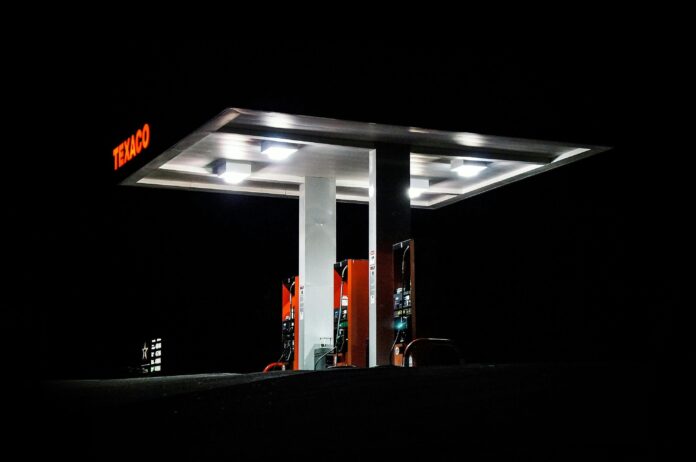
The most visible consequence of higher crude prices is more expensive petrol and diesel.
Crude oil is refined into fuels used by cars, trucks, aircraft and ships. When the price of crude rises, refiners and fuel distributors face higher input costs. Retail prices do not always move immediately or by the same amount, because taxes, refining margins, inventories, distribution costs and currency movements also matter.
Nevertheless, sustained increases in crude prices generally put upward pressure on fuel costs.
For households, this acts much like an additional tax on everyday life. People who must drive to work, transport children or travel long distances have less money available for other purchases. Lower-income households can be particularly exposed because fuel and transport often consume a larger share of their disposable income.
The impact varies between countries. Economies that produce substantial quantities of oil may receive higher export revenues, while countries that import most of their energy can face a deterioration in their trade balance. A weaker domestic currency can make imported oil even more expensive.
Diesel is particularly important because it powers much of the freight and agricultural machinery that keeps modern economies operating.
Higher diesel prices can therefore affect far more than the cost of filling a vehicle. They increase the expense of moving goods from factories to warehouses, from ports to shops and from farms to food-processing facilities.
The first inflationary impact may appear at the petrol pump. The broader economic consequences can take considerably longer to emerge.
Freight, food and the hidden costs of energy
Modern supply chains depend on energy at almost every stage.
Trucks require diesel, ships burn marine fuels, aircraft consume jet fuel, and warehouses and distribution centres require electricity. When energy prices rise, logistics companies must decide whether to absorb the additional expense, negotiate higher rates or pass the cost on to customers.
Large companies may be able to protect themselves through fuel contracts or hedging. Smaller operators often have less bargaining power and fewer financial resources to absorb sudden increases.
Eventually, higher transport costs can affect the prices of manufactured goods, building materials, household products and imported food.
Agriculture faces a similar problem. Farmers use diesel-powered machinery for planting, cultivation and harvesting. Food must then be transported, stored, processed and distributed, often using energy-intensive refrigeration.
Oil prices can also influence the cost of petrochemical feedstocks and some agricultural inputs. Fertiliser prices, however, are particularly sensitive to natural gas markets rather than crude oil alone. An energy crisis that affects both oil and gas can therefore place additional pressure on food production.
The timing matters. Fuel prices may respond quickly to an oil shock, while food and manufactured-goods prices can take weeks or months to adjust.
The Bank of England warned in its July 2026 Financial Stability Report that elevated energy prices were creating inflationary pressure while weighing on economic growth. It also noted that higher energy costs can take longer to pass through into non-energy goods such as food and manufactured products. (Bank of England, July 2026)
This delayed transmission creates a challenge for policymakers. By the time the full effects appear in inflation statistics, the original oil-price spike may already have started to fade—or the shock may have intensified.
The corporate squeeze: higher costs, weaker margins
For companies, expensive energy creates two related problems: rising operating costs and potentially weaker customer demand.
Airlines are among the most obvious examples. Fuel is a major operating expense, and a sustained increase in jet-fuel prices can place pressure on profitability. Airlines may raise ticket prices, introduce surcharges or reduce capacity, but their ability to pass on costs depends on competition and consumer demand.
Shipping companies, trucking operators and manufacturers face similar decisions.
Energy-intensive industries such as chemicals, metals, cement and some forms of industrial production may be particularly vulnerable. Their profitability depends partly on the difference between the prices they receive for their products and the costs of producing them.
If energy costs rise faster than selling prices, profit margins contract.
Businesses with strong brands, limited competition or long-term customer contracts may be better able to pass on higher costs. Others must absorb the increase, cut investment or find ways to improve efficiency.
The consequences extend to stock markets. Investors may revise earnings forecasts for companies exposed to fuel, freight and raw-material costs. At the same time, higher inflation can push bond yields upward and reduce the valuations investors are willing to pay for future profits.
Oil producers can benefit from higher prices, although the gains depend on production costs, taxation, hedging and the stability of their operations. Energy companies are not immune to geopolitical disruption, and higher crude prices do not automatically translate into stronger returns for every business in the sector.
The broader market effect depends on which companies gain from higher energy prices, which suffer from them, and how investors assess the likely duration of the shock.
Will consumers stop spending?
The economic danger becomes more serious when higher energy costs begin changing household behaviour.
Consumers generally cannot eliminate essential transport and energy expenditure immediately. Instead, they may reduce spending elsewhere: fewer restaurant visits, delayed purchases of electronics, cheaper holidays or postponed home improvements.
For individual households, these adjustments can appear modest. Across millions of consumers, however, they can weaken demand throughout the economy.
Businesses may respond by reducing production, postponing hiring or delaying investment. If sales fall while operating costs remain elevated, companies face pressure from both sides of their income statements.
This is one reason an oil shock can be economically damaging even if it does not cause a physical shortage of fuel.
Higher prices transfer purchasing power away from energy-importing households and businesses towards producers and exporters. Some of that money may return to the global economy through investment and spending by energy producers, but the redistribution is rarely immediate or evenly spread.
Countries heavily dependent on imported energy can be particularly vulnerable. They must spend more on the same quantity of fuel, leaving less income available for other imports and domestic activity.
The outcome depends on the duration of the shock, government support, exchange rates and the ability of households and companies to adjust.
A temporary increase may be absorbed without a major downturn. A sustained rise can become a broader drag on economic growth.
The central-bank dilemma: inflation or recession?
This is where the oil shock becomes a problem for monetary policy.
Central banks generally aim to maintain price stability while supporting sustainable economic activity. When inflation rises because demand is too strong, higher interest rates can help cool spending and reduce pressure on prices.
An oil shock is different. It raises costs while potentially weakening demand.
Central banks cannot produce more oil by increasing interest rates. Nor can they reopen shipping routes or repair damaged infrastructure. Their task is to prevent an initial increase in energy prices from spreading into persistent, economy-wide inflation.
If higher fuel and transport costs push headline inflation upward but longer-term inflation expectations remain stable, a central bank may decide to look through some of the temporary impact.
But the decision becomes more difficult if workers demand higher wages to compensate for rising living costs, businesses repeatedly increase prices, and consumers begin expecting inflation to remain elevated.
These second-round effects can make a temporary energy shock more persistent.
If inflation proves persistent, central banks may delay planned rate cuts, maintain restrictive policy for longer or, in some circumstances, raise rates further.
That would create difficulties for borrowers. Mortgage holders, businesses refinancing debt and governments issuing new bonds could all face higher financing costs than expected.
Yet raising rates aggressively also carries risks. If expensive energy is already squeezing household budgets and corporate profits, additional monetary tightening could deepen an economic slowdown.
Central banks would have to balance the danger of allowing inflation expectations to become entrenched against the danger of weakening an economy already under pressure.
Three possible outcomes
The future depends largely on how long oil prices remain elevated and whether the shock spreads into broader inflation.
Scenario one: a temporary spike. Geopolitical tensions ease, supplies remain available and prices retreat. Petrol costs rise temporarily, but businesses and consumers absorb the shock. Central banks may look through the short-term increase, allowing monetary policy to follow its previous course.
Scenario two: prolonged expensive energy. Prices remain elevated for several months. Freight, food and manufacturing costs rise progressively, while household spending weakens. Inflation declines more slowly than expected, forcing central banks to keep interest rates higher for longer.
Scenario three: a severe supply disruption. Damage to production infrastructure or a major interruption to shipping produces a substantial and sustained reduction in available supply. Energy prices rise further, inflation accelerates and economic growth deteriorates. Policymakers face the difficult prospect of stagflation: weak growth combined with persistent inflation.
None of these outcomes is inevitable. They illustrate why the duration and breadth of an energy shock matter more than a single day’s price movement.
Conclusion: the price of energy is the price of everything
Oil above $100 a barrel is not automatically a warning that another inflation crisis is imminent. Markets have experienced temporary price spikes before, and supply responses, weaker demand or easing geopolitical tensions can reverse them.
But the risk deserves serious attention.
Energy is embedded in the cost of transportation, food production, manufacturing and international trade. A sustained rise in oil prices can therefore reach far beyond the energy sector, reducing household purchasing power, squeezing corporate margins and complicating the outlook for economic growth.
For investors, the challenge is to identify whether the market is pricing a short-lived geopolitical shock or the beginning of a more persistent inflationary cycle. For businesses, it is a reminder that energy exposure and supply-chain resilience can determine profitability. For households, it means higher fuel bills can quietly reduce spending power elsewhere.
For central banks, the stakes are especially high. If higher oil prices remain temporary, policymakers may be able to look through the initial inflation spike. If energy costs spread into wages, services and inflation expectations, interest rates may need to remain higher for longer.
The critical question is therefore not simply whether Brent crude can stay above $100.
It is whether the world can absorb expensive energy without allowing a supply shock to become a lasting inflation problem—and whether central banks can contain that risk without pushing already vulnerable economies into recession.

