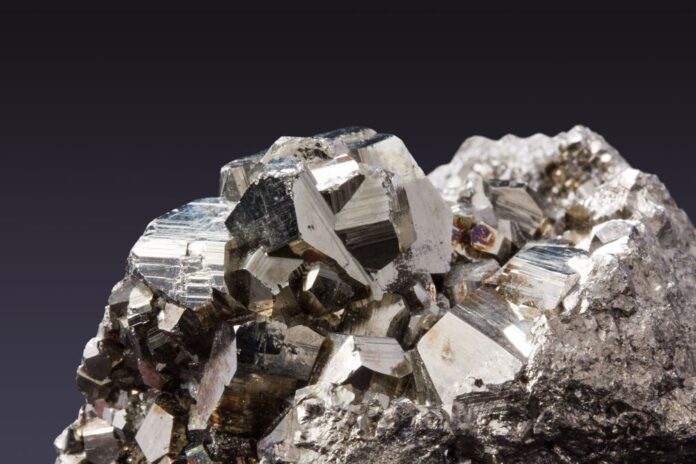
The next great struggle for economic power may not be decided in a stock exchange, a technology laboratory or a military headquarters. Increasingly, it will be shaped by what countries can extract from the ground, what they can manufacture from it, and how much control they have over the supply chains connecting the two.
Critical minerals have become essential to the modern economy. Lithium and graphite help power rechargeable batteries. Copper carries electricity through power grids, electric vehicles and data centres. Cobalt is used in certain battery chemistries and industrial applications, while rare earth elements are vital to powerful magnets, advanced electronics and a range of defence technologies.
These materials sit beneath many of the industries expected to shape the coming decades: electric vehicles, renewable energy, artificial intelligence infrastructure, advanced manufacturing and military technology.
Yet the global distribution of these resources is remarkably uneven. Some countries possess enormous mineral deposits but lack the industrial capacity to process them. Others have relatively limited domestic resources but dominate the refining, chemical processing or component manufacturing stages that turn raw materials into valuable products.
China has built a particularly influential position across several critical-mineral supply chains, while countries including Australia, Chile, the Democratic Republic of the Congo, Indonesia and Argentina possess important resources or production capabilities.
This imbalance is transforming mining into a geopolitical issue. Governments increasingly view access to minerals not simply as a commercial matter, but as a question of economic security.
For investors, the opportunity appears obvious. If the world needs more minerals, surely the companies that own the mines will benefit?
Not necessarily.
Mining is a capital-intensive, cyclical business exposed to commodity prices, political decisions, environmental constraints and unpredictable development costs. A mineral deposit can be strategically important without being commercially profitable. And a country can possess valuable resources without capturing much of the economic value generated by them.
The real battle is not simply over who owns the minerals. It is over who controls the supply chains, captures the profits and determines who gets access when supplies become scarce.
The New Geopolitics of Resources
For much of the twentieth century, resource competition centred on oil, natural gas and other traditional commodities. Energy security shaped foreign policy, military strategy and international alliances.
Critical minerals are introducing a different kind of vulnerability.
Unlike oil, which can often be transported and used through relatively established global markets, many critical minerals pass through specialised processing facilities before they become useful industrial inputs. The ability to refine a mineral to the required purity, manufacture a specialised chemical or produce a high-performance component can be just as important as access to the original deposit.
This creates opportunities for countries that control particular stages of the supply chain.
A country might not possess the largest lithium reserves, for example, but it could still exercise considerable influence if it dominates the production of battery-grade chemicals. A nation with relatively modest rare earth mining output could gain strategic importance through its ability to separate and refine those elements or manufacture the magnets used in electric motors.
The International Energy Agency has warned that critical-mineral supply chains remain highly concentrated and vulnerable to disruption. Its 2026 outlook also highlights the expanding use of export controls and the growing importance of supply-chain resilience to economic and national security. IEA, Global Critical Minerals Outlook 2026.
For governments, this creates a powerful incentive to diversify suppliers, establish domestic processing facilities, build strategic stockpiles and develop alternative sources of production.
For mining companies, it can create access to government support, long-term supply agreements and customers willing to pay more for secure supplies.
However, geopolitical importance does not eliminate the commercial risks. In some circumstances, it can introduce additional costs, regulatory uncertainty and political interference.
Lithium: The Metal Behind the Battery Revolution
Lithium has become one of the most recognisable critical minerals because of its role in rechargeable batteries.
Electric vehicles, smartphones, laptops and stationary energy-storage systems all rely on battery technologies, although their chemistries differ. Lithium-ion batteries are particularly important because they combine useful energy density with the ability to be recharged repeatedly.
The expansion of electric vehicles and grid-scale battery storage has therefore made lithium a strategic industrial material.
Australia is a major lithium producer, with much of its production coming from hard-rock deposits. Chile and Argentina are important producers associated with the lithium-rich salt flats of South America’s Lithium Triangle. China also occupies an influential position in lithium processing and battery manufacturing.
These different roles matter.
Extracting lithium-bearing rock or brine is only the beginning. The material must be processed into suitable lithium compounds, such as lithium carbonate or lithium hydroxide, before it can enter particular battery supply chains.
The technical requirements vary by battery chemistry and customer specification. Producing a saleable mineral concentrate is not the same as producing a battery-grade chemical that meets a manufacturer’s requirements.
This distinction creates opportunities for companies that can establish reliable processing operations, secure customer contracts and produce consistently to specification.
It also explains why countries with substantial lithium deposits may struggle to capture the full value of their resources.
The problem with the lithium boom
Lithium illustrates one of the central paradoxes of critical-mineral investing: strong long-term demand does not guarantee strong prices in the short term.
When lithium prices rise sharply, producers are encouraged to expand capacity. New mines are developed, existing operations increase production, and new companies enter the market hoping to benefit from continued demand growth.
But mines and processing facilities do not necessarily begin producing at exactly the moment the market needs them. Projects launched during a price boom may arrive years later, when supply has expanded and demand has grown more slowly than expected.
The result can be oversupply and falling prices.
This is not a theoretical concern. The IEA’s 2025 outlook documented a major correction in lithium prices after the extraordinary increases of 2021 and 2022, even as demand continued to grow. Its 2026 analysis subsequently reported a recovery in lithium prices amid stronger demand from energy storage and constrained supply. These shifts demonstrate how quickly commodity conditions can change. IEA, Global Critical Minerals Outlook 2025 and 2026 outlook.
For investors, the question is not merely whether the world will use more lithium. It is whether a particular producer can sell its output at prices sufficient to cover its operating expenses, capital costs and financing obligations.
A low-cost producer with established operations may survive a downturn comfortably. A highly indebted developer that has yet to begin production may struggle to raise the additional capital needed to finish its project.
Both may own valuable deposits. Only one may be positioned to survive a prolonged period of weak prices.
Copper: The Metal Holding the Electrified Economy Together
Lithium attracts attention because of batteries, but copper may be even more fundamental to the wider transformation of the global economy.
Copper is an excellent electrical conductor and is widely used in power cables, transformers, motors, electronics and industrial equipment.
Electric vehicles require copper in their motors, wiring and electrical systems. Renewable energy installations need it for generators, cables and connections. Expanding electricity grids requires vast amounts of conductive material, while data centres need extensive electrical infrastructure to supply and distribute power.
As countries electrify transport, expand renewable energy and build computing infrastructure, copper demand is likely to remain strategically important.
Chile and Peru are major copper-producing countries, while the Democratic Republic of the Congo and other countries also contribute to global supply. China, meanwhile, is a major centre of copper smelting, refining and manufacturing demand.
Copper faces a particular challenge: developing new mines can be slow, expensive and technically difficult.
Many established deposits are ageing, and some operations must process increasingly large quantities of ore to produce the same amount of metal. New projects can face difficult geology, water constraints, environmental approvals, infrastructure limitations and opposition from local communities.
The IEA’s 2025 assessment highlighted the possibility of a substantial copper supply shortfall by 2035 under its stated-policy scenario, based on the pipeline of announced projects. Such projections are not certainties, but they underline the difficulty of bringing new supply online quickly. IEA, Overview of Outlook for Key Minerals.
Why copper can be an infrastructure investment
Copper’s appeal is that its demand comes from several overlapping sources rather than a single technology.
Even if electric-vehicle adoption grows more slowly than expected, electricity networks still require maintenance and expansion. Data centres still need power. Industrial facilities still use electrical equipment.
However, investors should not confuse long-term importance with guaranteed price appreciation.
Copper prices are also influenced by construction, Chinese industrial activity, manufacturing cycles, inventories, currency movements and global economic growth. A recession can weaken demand even when the long-term energy-transition outlook remains intact.
Mining companies face additional risks, including labour disputes, declining ore grades, project delays and cost inflation.
The most attractive businesses may be those with established, low-cost operations, long reserve lives and manageable capital requirements. A proposed copper mine with excellent geology can still be a poor investment if its development costs are excessive or its approvals remain uncertain.
Cobalt: Strategic Importance and the Politics of Supply
Cobalt is used in several industrial applications, including certain lithium-ion battery chemistries, aerospace alloys and specialised equipment.
Its role in batteries has made it particularly important to electric-vehicle supply chains, although its importance varies with battery design.
Many nickel-manganese-cobalt batteries use cobalt as part of their cathode chemistry. Other battery technologies, including lithium iron phosphate batteries, do not require cobalt in their cathodes. The increasing adoption of cobalt-free or lower-cobalt technologies therefore creates an important uncertainty for future demand.
The Democratic Republic of the Congo is central to global cobalt mining. This concentration gives the country considerable influence over a material used in industries far removed from its own borders.
When supply becomes excessive and prices fall, producers may struggle to remain profitable. When supply is restricted, manufacturers may face shortages and higher input costs.
The DRC has demonstrated how governments can use control over mineral exports to influence market conditions. In 2025, it introduced a temporary suspension of cobalt exports in response to falling prices, followed by a quota-based approach. The episode showed that resource-rich governments can intervene directly in the market rather than simply accepting the role of price-taking suppliers. IEA, Global Critical Minerals Outlook 2026.
For the government, restricting supply can be an attempt to support prices and protect the value of a national resource. For mining companies, the effect is more complicated.
Higher prices can improve revenue for producers that are permitted to export. But quotas, licensing uncertainty and changing regulations can also disrupt sales, delay shipments and make long-term planning more difficult.
Downstream manufacturers may respond by holding additional inventory, developing alternative suppliers or redesigning their products.
That is the broader lesson: a country can possess significant market leverage without necessarily maximising its own long-term economic gains.
The best outcome depends on how export policies affect investment, production, local employment and the development of the wider industrial ecosystem.
Graphite: The Overlooked Material Inside Batteries
Graphite receives less attention than lithium, but it is a major material in many lithium-ion battery anodes.
Anodes are essential components of rechargeable batteries, and battery-grade graphite must meet demanding processing and quality requirements. Natural graphite can be mined, while synthetic graphite is manufactured using industrial processes.
The global graphite supply chain illustrates why processing matters as much as extraction.
China has a particularly influential position in graphite processing and battery-anode materials. This means manufacturers can remain dependent on Chinese suppliers even when the original graphite is mined elsewhere.
Graphite is also used in refractories, industrial applications and other products, giving it a broader economic role beyond batteries.
For electric-vehicle manufacturers, the availability of reliable anode materials can affect production costs and the ability to scale battery output. For governments, a concentrated supply chain presents a potential vulnerability.
Export restrictions on graphite-related products can therefore have consequences for battery manufacturers and other industrial customers.
Alternative producers may benefit if customers seek to diversify their sources. However, establishing a commercially competitive graphite-processing operation requires technical expertise, suitable facilities, reliable energy supplies and customers willing to qualify the resulting product.
As with lithium, the opportunity is not simply to extract a resource. It is to deliver a consistent, commercially competitive material that manufacturers can actually use.
Investors should also examine substitution and recycling. Changes in battery chemistry, improvements in material efficiency and the recovery of graphite from used batteries could affect future demand for newly mined material.
Rare Earth Elements: Small Quantities, Enormous Strategic Value
Rare earth elements occupy a distinctive position in the critical-mineral debate.
Despite their name, some rare earth elements are relatively abundant in the Earth’s crust. The challenge is finding economically viable deposits and separating the elements into materials with the required purity.
Certain rare earths, including neodymium, praseodymium, dysprosium and terbium, are important for high-performance permanent magnets.
These magnets are used in electric motors, wind turbines and various industrial, electronic and defence applications. Other rare earth elements have different uses, including in specialised optics, catalysts and electronics.
The strategic significance of rare earths comes partly from their specialised applications and partly from the concentration of processing and magnet manufacturing.
China has built a dominant position in several parts of this supply chain. Alternative mining projects exist, but establishing the complete chain from ore extraction to separated oxides, metals, alloys and finished magnets is difficult.
This creates a bottleneck. A manufacturer may have access to a rare earth deposit outside China but still lack a reliable alternative source of the specialised material needed to produce its final product.
The consequences extend to industries such as automotive manufacturing, aerospace and defence, where certain components cannot be replaced quickly without engineering changes and qualification procedures.
Export controls can therefore have an outsized effect relative to the volume of material involved.
The IEA’s 2026 analysis highlighted the risks created by concentrated rare earth supply chains and the price differences that can emerge between Chinese and international markets when trade restrictions limit access. IEA, Global Critical Minerals Outlook 2026.
For investors, the rare earth sector offers both an opportunity and a warning.
Alternative producers may become more valuable if governments and manufacturers prioritise supply security. Yet rare earth projects can face complex metallurgy, high processing costs, environmental challenges and volatile market conditions.
The mere existence of a deposit does not establish that it can be processed economically or that its output will be competitive.
How Resource-Rich Countries Turn Minerals Into Geopolitical Leverage
Mineral wealth can give a country influence that extends far beyond its domestic economy.
When a nation controls a substantial share of a material that other countries cannot easily replace, it has the potential to influence prices, negotiate industrial agreements and strengthen its diplomatic position.
Governments can use several mechanisms to pursue these objectives.
Export restrictions and quotas
A government can limit the volume of a mineral that leaves the country, require licences or restrict exports of particular products.
These measures can be intended to support prices, protect domestic supplies or encourage foreign manufacturers to establish local operations.
They can also create uncertainty for customers and discourage investment if businesses cannot reliably predict future export conditions.
Domestic processing requirements
Some governments want more than royalties and employment from mining. They want the refining facilities, chemical plants and manufacturing operations that create additional economic value.
Indonesia’s nickel industry provides an important example of this strategy. Restrictions on raw nickel exports helped encourage investment in domestic processing and battery-related industrial capacity, although the policy has also generated trade disputes and debate about environmental and economic costs.
The broader principle is that processing can create additional jobs, technical expertise and commercial opportunities.
However, building industrial capacity requires infrastructure, electricity, water, skilled workers, financing and access to markets. Processing facilities that are expensive to operate or dependent on subsidies may struggle to remain competitive.
Strategic partnerships and supply agreements
Resource-rich countries can negotiate long-term supply agreements with major manufacturers and governments.
These arrangements may provide greater certainty for producers while helping customers secure materials for future factories and infrastructure.
Governments may also exchange investment access for commitments to develop local processing, train workers or improve transport and energy infrastructure.
The value of these arrangements depends on their commercial terms. A large headline investment does not necessarily translate into substantial local profits or durable economic development.
Strategic stockpiles
Governments can purchase and store critical minerals to protect essential industries against future disruptions.
Stockpiles may help stabilise supply during a crisis, but they also tie up capital and can influence market prices. Poorly designed stockpiling policies can distort commercial demand or leave governments holding materials that later decline in value.
Ultimately, mineral leverage depends on the availability of substitutes, the time required to develop alternative supplies and the economic cost of a disruption.
A dominant supplier may have considerable short-term influence, but customers will often invest in alternatives if they believe that dependence has become too risky.
The Resource Curse: Why Mineral Wealth Does Not Guarantee Prosperity
For a country with valuable mineral deposits, the opportunity can appear extraordinary.
Mining can attract foreign investment, create jobs, generate export revenue and provide tax income that supports infrastructure, education and public services.
Yet resource-rich countries have often struggled to convert their natural wealth into broad, lasting prosperity.
The reasons are varied.
Commodity prices can be highly volatile. A government that relies heavily on mining revenue may enjoy rapid growth during a boom, only to face severe budget pressure when prices fall.
Mining can also create an economy that depends excessively on a small number of export industries. Other sectors may struggle to compete for labour and capital, particularly when a resource boom strengthens the national currency and raises domestic costs.
Governance is another critical factor. Weak institutions, corruption, poorly designed contracts and inadequate oversight can prevent mineral wealth from reaching the wider population.
Environmental damage and conflicts over land use can impose additional costs, especially when communities believe that they bear the consequences of extraction without receiving a fair share of the benefits.
The challenge is therefore not simply to extract minerals. It is to manage the resulting revenue, build capable institutions and develop other productive industries.
Countries that successfully use resource wealth to improve infrastructure, education, technical capabilities and economic diversification may be better positioned to sustain growth after individual mineral booms fade.
For investors, governance and institutional quality are not peripheral concerns. They can directly influence the security of mining rights, taxation, operating costs and the likelihood that a project will be allowed to proceed.
Why Owning a Mine Does Not Guarantee Investment Success
For investors, the critical-minerals story presents an obvious temptation: identify a material expected to experience rising demand, then purchase shares in companies that own deposits of that material.
The problem is that mining is not a simple business of selling an increasingly valuable resource.
A mine must be discovered, evaluated, permitted, financed, constructed and operated. Each stage introduces risks, and failure at any point can destroy substantial shareholder value.
Commodity prices can collapse
Even when long-term demand grows, new supply can arrive faster than expected.
Mining companies often make investment decisions based on projected future prices. If too many producers expand simultaneously, the market can become oversupplied.
Lower prices reduce revenue and can force high-cost operations to suspend production. Developers without operating cash flow may struggle to raise the money required to finish their projects.
Construction costs can overwhelm the economics
Large mines require significant spending on equipment, roads, power, water, processing plants and other infrastructure.
Remote locations can be particularly expensive. Projects may also face labour shortages, engineering problems, inflation and delays in obtaining permits.
If development costs rise substantially, a project that initially appeared profitable may no longer generate an attractive return.
A deposit is not the same as a mine
A company may announce a large mineral discovery, but the economic value of that discovery depends on far more than the quantity of material underground.
Investors need to understand the grade of the deposit, the difficulty of extraction, the recovery rate, the quality of the final product and the expected cost of production.
A deposit can contain an impressive amount of lithium or rare earth elements while remaining uneconomic to develop.
Financing can dilute shareholders
Mining projects frequently require additional capital before they generate revenue.
A company may finance construction by issuing new shares, borrowing money or entering into agreements that give another party rights to future production.
Each approach has costs.
New share issuance can dilute existing shareholders. Excessive debt can leave a company vulnerable to lower commodity prices or rising interest rates. Offtake agreements may provide funding or customer certainty but require the company to commit future production under specified terms.
Investors must assess not just the potential size of a project, but whether the company has a credible route to financing and completing it.
Governments can change the rules
Mining companies operate within political and regulatory systems that may change over the life of a project.
Governments can alter royalty rates, taxes, export restrictions, ownership requirements and environmental standards. These changes can affect project economics even when the underlying mineral deposit remains unchanged.
Resource nationalism can benefit a country in some circumstances, but abrupt or unpredictable policy changes may discourage future investment.
Environmental and social issues can stop a project
Mining requires land, water, energy and waste management. Projects can face opposition from local communities, Indigenous groups and environmental organisations.
These concerns are not merely reputational. They can affect access to land, permitting timelines, financing and the ability to operate continuously.
A project with strong geology but unresolved community or environmental issues may never reach commercial production.
The central investment lesson is that a mineral’s strategic importance is only one part of the equation. A successful investment also requires a capable company, realistic economics, manageable financing and a workable political environment.
Where the Investment Opportunities May Lie
The critical-minerals industry contains several distinct investment categories, each with its own risks.
Established mining producers may offer operating cash flow, existing infrastructure and experience managing commodity cycles. Their performance still depends on production costs, balance-sheet strength and the prices they receive.
Exploration and development companies offer exposure to discoveries and new projects. However, they often have limited revenue, high financing requirements and substantial uncertainty over whether their deposits will become producing mines.
Refining and processing businesses may benefit from government efforts to diversify supply chains. Their economics depend on processing costs, energy prices, technical performance, product quality and access to customers.
Equipment and engineering suppliers provide machinery, automation, specialist services and technology used in mining and processing. They can benefit from new investment without necessarily bearing the full commodity-price risk of owning a mine.
Recycling companies aim to recover valuable materials from used batteries, electronics and industrial products. Recycling could reduce reliance on newly mined material, although collection rates, recovery costs, product quality and available feedstock determine commercial viability.
Manufacturers of critical components can benefit from secure access to materials and growing demand for technologies such as batteries, electric motors and power infrastructure. They may also be exposed to shortages and higher input costs.
These categories are not interchangeable. A mining company might benefit from higher prices but suffer from rising development costs. A processor might benefit from government support but struggle if raw materials become expensive. A recycling company might operate in a rapidly growing market but still fail to generate positive cash flow.
The best investment analysis begins with understanding where a company sits in the value chain and which economic forces determine its profitability.
What Investors Should Watch Next
Several developments will help determine how the critical-minerals industry evolves.
Supply concentration: Are countries diversifying production and processing, or is dependence on a small number of suppliers becoming more pronounced?
Commodity prices and inventories: Are markets tightening, or is new production creating oversupply? Inventory movements can help explain why prices sometimes diverge from long-term demand expectations.
Government policy: Are export restrictions, domestic processing requirements and industrial subsidies changing the competitive landscape?
Project financing: Can proposed mines and processing plants secure sufficient capital to reach production, especially when commodity prices are weak?
Technological substitution: Could changes in battery chemistry, magnet design or manufacturing efficiency reduce demand for particular minerals?
Recycling: Can recovered materials become a meaningful and commercially competitive source of supply?
Infrastructure and permitting: Can resource-rich countries provide the power, water, transport and regulatory certainty needed to develop projects on time?
Customer contracts: Do producers have credible buyers and commercially attractive agreements, or are they relying on optimistic assumptions about future demand?
The answers will differ from one mineral to another. Copper’s long development timelines create a different investment challenge from lithium’s exposure to rapid changes in battery demand and supply. Rare earths have their own processing constraints, while cobalt faces the additional uncertainty of changes in battery chemistry.
Investors should resist treating critical minerals as one uniform sector. Each material has its own supply chain, technological alternatives, market structure and geopolitical risks.
Conclusion: The Future Belongs to More Than the Owners of the Mines
Critical minerals are becoming central to the competition for industrial and technological power.
Lithium and graphite support battery production. Copper underpins electrification and expanding electricity networks. Cobalt remains important to certain battery chemistries and specialised applications. Rare earth elements enable powerful magnets and other components used in advanced manufacturing and defence.
The countries that control these materials, and the companies capable of transforming them into industrial products, will play an important role in shaping the future economy.
But resource ownership alone does not determine success.
A country may possess enormous mineral deposits without having the infrastructure or expertise to process them. A mining company may control a valuable resource but struggle with costs, financing or falling prices. A government may use export restrictions to gain leverage but inadvertently encourage customers to develop alternative suppliers.
The greatest opportunities are likely to emerge where geological advantages meet efficient operations, reliable infrastructure, capable institutions and sustained customer demand.
For resource-rich countries, the challenge is to turn mineral wealth into lasting economic development rather than another temporary commodity boom. For companies, it is to build commercially sustainable operations in a world where supply security is increasingly valuable. For investors, it is to distinguish genuine competitive advantages from exciting narratives about the future.
The battle for critical minerals is ultimately a battle over the foundations of the modern economy. The materials themselves may come from the ground, but their lasting value will depend on the industrial systems, technological capabilities and institutions built around them.
And that is why the most important question is not simply who owns the mine.
It is who can turn those resources into something the world needs, at a price the market can sustain, while still earning an attractive return.

