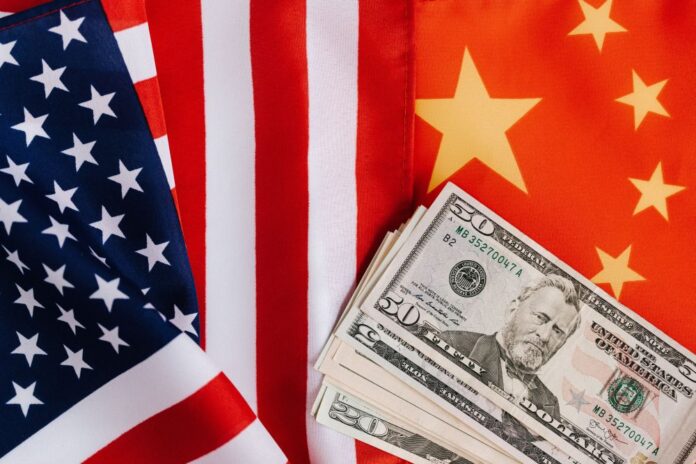
For decades, globalisation operated on a relatively straightforward principle: companies would manufacture products wherever they could do so most efficiently, source components from the most competitive suppliers and sell to the largest available markets. Capital flowed across borders, supply chains stretched around the world, and businesses built their strategies around cost, productivity and access to consumers.
The rivalry between the United States and China is challenging that model.
The world’s two largest economies remain deeply connected through trade, investment, manufacturing and technology. Yet their relationship increasingly combines commercial interdependence with strategic competition. Washington wants to protect its technological advantages, strengthen domestic industry and reduce vulnerabilities in critical supply chains. Beijing wants to develop technological self-sufficiency, expand its industrial capabilities and reduce its dependence on foreign-controlled technologies.
Neither side can easily separate its economy from the other. But both are attempting to reduce the risks associated with that dependence.
For investors, this creates a complicated environment. Tariffs can change the economics of manufacturing overnight. Semiconductor restrictions can determine which companies have access to advanced computing power. Export controls on critical minerals can disrupt industries ranging from electric vehicles to aerospace. Meanwhile, Taiwan’s position at the centre of advanced semiconductor manufacturing makes geopolitical tensions in the Taiwan Strait a potential risk for the entire global economy.
The result is a world in which investment decisions increasingly depend not only on consumer demand and company earnings, but also on government policy, national security and geopolitical relationships.
Understanding this rivalry is becoming essential to understanding the future of global markets.
The Trade War: When Tariffs Become an Economic Weapon
Tariffs are taxes imposed on imported goods. Governments can use them to protect domestic industries, respond to trade disputes, raise revenue or pressure foreign governments into changing their policies.
In practice, tariffs make imported products more expensive relative to domestic alternatives, assuming the additional cost is passed through to buyers. The actual burden can be shared among importers, foreign exporters, businesses further along the supply chain and consumers.
The United States and China have increasingly used tariffs as instruments of economic competition.
Washington has sought to protect strategic industries, address concerns about Chinese industrial policy and encourage more manufacturing within the United States. Beijing has responded with its own trade measures and has used its influence over certain critical materials and supply chains as leverage.
The implications extend far beyond the two countries.
Consider an American company that imports components from China to manufacture household electronics. If tariffs raise the cost of those components, the company must decide whether to absorb the additional expense, increase prices, negotiate lower supplier prices or relocate production.
Each option has consequences.
Absorbing the cost reduces profit margins. Raising prices can weaken demand. Finding alternative suppliers requires time and money. Building a new manufacturing operation elsewhere may involve substantial capital expenditure before production becomes commercially viable.
The same pressures affect retailers, industrial manufacturers, automotive companies and technology businesses.
Tariffs can also create opportunities. Manufacturers operating in countries that face lower trade barriers may become more competitive, encouraging businesses to move production to alternative locations.
Countries such as Vietnam, India, Thailand and Mexico can benefit when companies diversify manufacturing away from China, although the scale of those benefits depends on infrastructure, labour availability, trade agreements, local capabilities and the specific products involved.
However, relocating a factory does not necessarily eliminate exposure to China. A product assembled in another country may still rely on Chinese components, machinery, chemicals or raw materials. Its eligibility for preferential tariff treatment can also depend on rules of origin and other trade requirements.
For investors, the important question is not simply which countries might benefit from tariffs. It is which companies can adapt their supply chains without sacrificing too much profitability.
Semiconductors: The Battle for the Foundations of Modern Technology
Few industries illustrate the US–China rivalry more clearly than semiconductors.
Computer chips are essential to smartphones, cloud computing, electric vehicles, industrial automation, telecommunications, weapons systems and artificial intelligence. The most advanced chips also determine how quickly and efficiently companies can train and operate sophisticated AI models.
Control over semiconductor technology therefore has enormous commercial and strategic value.
The semiconductor industry is unusually complex. Designing a processor, manufacturing it, producing specialised equipment and packaging the finished chip are separate activities that often involve different companies and countries.
American companies have major positions in chip design and semiconductor manufacturing equipment. Taiwan is central to advanced contract chip manufacturing. South Korea is particularly important in memory chips, while Japan plays important roles in semiconductor materials and equipment. The Netherlands is home to ASML, a critical supplier of advanced lithography systems.
This international division of labour has produced extraordinary technological progress. It has also created dependencies that governments increasingly regard as strategic vulnerabilities.
Why Washington restricts advanced chips
The United States has imposed restrictions on China’s access to certain advanced semiconductors, manufacturing equipment and related technologies, arguing that these capabilities have national security implications.
Advanced processors can accelerate AI development, high-performance computing and military applications. Washington therefore seeks to limit China’s access to technologies it considers particularly sensitive.
These measures create direct consequences for chipmakers.
A company that previously expected to sell a product into China may find that particular transactions require licences or are prohibited. Manufacturers may need to redesign products for different markets, strengthen compliance procedures or reconsider investment plans.
The restrictions can also encourage Chinese customers to seek domestic alternatives, potentially accelerating the development of China’s own semiconductor industry.
For American chip companies, this creates a strategic dilemma. Restrictions may protect certain technological advantages, but they can also reduce access to a large market and create incentives for foreign competitors to develop substitutes.
The competitive landscape is therefore changing on two fronts: the technological race itself and the regulatory decisions that determine which products can be sold.
China’s push for semiconductor independence
Beijing has made technological self-sufficiency a major priority, supporting domestic capabilities in semiconductors, AI, industrial automation and advanced manufacturing.
The objective is to reduce dependence on foreign suppliers whose products may become unavailable during a political dispute.
Developing a complete semiconductor ecosystem is extraordinarily difficult, however. Advanced chip production requires specialised machinery, materials, engineering expertise, manufacturing experience and substantial capital investment.
China has made progress in several semiconductor segments, but matching the most advanced capabilities across the entire supply chain remains a formidable challenge.
For investors, this creates two competing possibilities.
First, restrictions and domestic industrial support could create opportunities for Chinese companies developing alternative technologies. Second, the expense of duplicating established global capabilities could produce lower returns, excess capacity and intense competition.
Government support does not guarantee commercial success. Investors must still assess product quality, customer demand, profitability and the ability to compete without permanent subsidies.
The latest competition is also visible in the broader AI industry. In October 2026, a report about advances by Chinese memory-chip maker CXMT contributed to concerns about competition for US chipmakers, illustrating how technological progress can influence market expectations even without a new tariff announcement. <Cite refs={[“turn749347news10”]}/>
The investment lesson is straightforward: semiconductor companies must be evaluated not only on technological leadership, but also on where they can manufacture, which customers they can serve and how exposed their business models are to changing export rules.
Artificial Intelligence: The Next Front in Economic Competition
Artificial intelligence has transformed the US–China rivalry from a contest over manufacturing and trade into a broader competition over computing power, software, data and technological ecosystems.
AI requires more than advanced chips. It depends on data centres, electricity, cooling systems, networking equipment, memory, cloud infrastructure and the engineers capable of building and operating these systems.
This creates opportunities across a much wider range of industries.
Companies supplying AI accelerators, semiconductor manufacturing equipment, data-centre components and high-performance networking may benefit from expanding investment in computing infrastructure. Electricity generators, grid-equipment manufacturers and cooling-system suppliers may also benefit as data centres demand more power.
But the same expansion introduces risks.
AI infrastructure requires enormous capital investment, and investors must eventually determine whether the revenue generated by AI services justifies the expense. A geopolitical disruption could compound that uncertainty by restricting access to chips, equipment or customers.
The rivalry also extends to AI models and applications. American technology companies have significant global positions in cloud services, software and advanced AI systems. Chinese companies are developing competing models, domestic computing platforms and applications designed for their own market.
Chinese policy increasingly emphasises AI development and industrial upgrading, while also seeking to manage speculative investment and technological risks. <Cite refs={[“turn749347news11”]}/>
For investors, the competition creates a distinction between companies that benefit from AI adoption and companies whose success depends on access to a particular market or technology.
A cloud provider may have strong global demand but still face restrictions on serving certain customers. A chip designer may lead technologically but lose sales if export rules change. A Chinese AI developer may benefit from domestic demand but encounter constraints on advanced computing hardware.
The winning businesses will need more than impressive technology. They will need resilient supply chains, regulatory adaptability and sustainable economics.
Manufacturing: The World Is Rebuilding Its Supply Chains
For much of the globalisation era, companies concentrated manufacturing in locations that offered the best combination of cost, skills, infrastructure and supplier access.
China became a central part of this system because it developed an enormous industrial ecosystem. Its advantages extend beyond lower-cost labour to include specialised suppliers, logistics networks, engineering capabilities and the ability to manufacture products at enormous scale.
These advantages cannot be replicated simply by announcing a new factory.
Nevertheless, geopolitical tensions are encouraging businesses to diversify production.
Some companies are adopting a strategy often described as China plus one: maintaining Chinese operations while establishing additional manufacturing capacity elsewhere.
Others are bringing selected production processes closer to their principal markets or investing in domestic facilities for strategically important products.
This shift can benefit industrial-property owners, logistics companies, automation suppliers and manufacturers in alternative production centres.
However, it also introduces costs.
Operating multiple factories can reduce economies of scale. Establishing new supplier relationships takes time. Workers must be trained, equipment installed and production quality verified. Companies may also have to duplicate inventory and logistics arrangements.
The result can be a more resilient but less efficient global manufacturing system.
Which countries could benefit?
Vietnam has attracted manufacturing investment in electronics, consumer goods and other export-oriented industries. Its future gains depend partly on infrastructure, workforce capabilities and its ability to satisfy relevant trade rules.
India offers a large domestic market and ambitions to expand electronics, semiconductor-related activity and industrial manufacturing. Its opportunity is substantial, but execution depends on infrastructure, skills, regulatory conditions and the development of supplier networks.
Mexico can benefit from proximity to the United States and established manufacturing integration with the North American economy. Its competitiveness also depends on trade rules, energy availability, infrastructure and policy stability.
Thailand and Malaysia have important roles in regional electronics and industrial supply chains. Thailand has established automotive and electronics manufacturing capabilities, while Malaysia has a significant semiconductor assembly, testing and packaging ecosystem.
These economies are not interchangeable. Each has different strengths, constraints and levels of exposure to Chinese components, American demand and global technology investment.
For investors, country-level headlines can be misleading. A rising share of manufacturing activity does not automatically translate into rising profits for every company operating there.
The strongest opportunities may belong to businesses that can capture a specific bottleneck: specialised components, industrial automation, logistics, power infrastructure or manufacturing services that are difficult to replace.
Critical Minerals: China’s Strategic Advantage
Semiconductors receive much of the attention, but the rivalry also concerns the materials needed to manufacture advanced technology.
Rare earth elements and other critical minerals are used in permanent magnets, electric motors, wind turbines, batteries, electronics and defence systems. Their importance depends not only on where they are mined, but also on where they are processed into materials suitable for industrial use.
China occupies a particularly strong position in several critical-mineral supply chains, especially rare earth processing and magnet production.
That creates leverage.
If export restrictions limit the availability of a critical material, manufacturers elsewhere may struggle to maintain production even if they have access to capital and willing customers.
A shortage of specialised materials can affect automotive production, electronics, aerospace and defence manufacturing. Finding alternative sources is often difficult because processing facilities require investment, technical expertise, environmental approvals and reliable commercial demand.
This has encouraged governments and companies to seek alternative suppliers, develop domestic processing capabilities and build strategic inventories.
Yet diversification is not cost-free. New projects can take years to develop, and higher-cost suppliers may struggle to compete when prices fall.
Investors should therefore distinguish between companies with proven production capabilities and businesses whose valuations depend largely on future demand for strategic resources.
A government announcement about a critical-minerals project may create excitement, but commercial success still depends on the quality of the deposit, processing technology, operating costs, financing and long-term customer agreements.
Taiwan: The Small Island With Global Economic Significance
Taiwan occupies a central position in the US–China rivalry because of its political status, strategic location and importance to advanced semiconductor manufacturing.
China claims Taiwan as part of its territory, while Taiwan operates with its own democratically elected government. The United States maintains unofficial relations with Taiwan and has a significant interest in preserving stability across the Taiwan Strait.
The dispute creates geopolitical uncertainty with consequences far beyond East Asia.
Taiwan Semiconductor Manufacturing Company, commonly known as TSMC, is a leading contract manufacturer of advanced chips. Its manufacturing capabilities are deeply embedded in the supply chains supporting smartphones, high-performance computing and AI infrastructure.
Taiwan’s importance extends beyond the factories themselves. The surrounding ecosystem includes semiconductor packaging, testing, specialist engineering, materials, equipment and highly experienced suppliers.
Even where companies are attempting to diversify production to the United States or elsewhere, building equivalent capabilities takes time.
This is why Taiwan has become increasingly important to the global technology industry. Its semiconductor ecosystem supports companies whose products are central to the growth of AI and advanced computing. <Cite refs={[“turn749347search1”]}/>
What would a crisis mean for investors?
A military conflict would be an extreme scenario, but serious disruption could also result from a blockade, shipping interruptions, cyberattacks, political escalation or restrictions on trade.
The immediate consequences could include interruptions to semiconductor supply, delays in electronics manufacturing, higher shipping and insurance costs, and a sharp increase in uncertainty across financial markets.
Technology companies could struggle to obtain essential components. Automotive manufacturers might face production delays. Data-centre construction could be disrupted, affecting the companies building the infrastructure behind AI.
The impact would not be confined to Taiwan or China. Businesses throughout the United States, Europe and Asia depend on internationally distributed semiconductor supply chains.
Financial markets would also have to reassess the risks associated with companies that rely heavily on Taiwanese production.
Some manufacturers might benefit from stronger demand for alternative production capacity over the longer term, but that would not necessarily compensate for the immediate economic damage of a major disruption.
The timing matters. Diversification efforts can reduce vulnerability, but they cannot instantly replace the scale, expertise and interconnected infrastructure already concentrated in Taiwan.
For long-term investors, Taiwan represents a low-frequency but potentially very high-impact geopolitical risk. It is a reason to understand supply-chain concentration rather than simply a prediction that a crisis will occur.
The Industries Most Exposed to the Rivalry
The US–China competition affects different industries in different ways. Some face direct restrictions, others depend on critical materials, and many are exposed indirectly through customers, suppliers or financing conditions.
1. Semiconductors and semiconductor equipment
Chip designers, foundries, memory producers, equipment suppliers and packaging companies face changing export rules, intense competition and significant capital requirements.
The key questions are whether a company can access its target markets, obtain necessary manufacturing equipment and maintain its technological advantage.
2. Artificial intelligence and cloud computing
AI developers and cloud providers depend on advanced chips, data centres, electricity and global technology supply chains. Restrictions on hardware access can affect computing costs and product development.
Investors should also assess whether substantial AI infrastructure spending will produce adequate commercial returns.
3. Electric vehicles and batteries
China is a major force in electric vehicles, battery manufacturing and associated supply chains. Tariffs, subsidies, local-content requirements and restrictions can reshape competition between Chinese manufacturers and companies in the United States, Europe and other markets.
Battery materials and processing capacity create additional points of vulnerability.
4. Rare earths and critical minerals
Mining, refining and specialised material production can become strategically important when governments seek to reduce dependence on a small number of suppliers.
Potential beneficiaries include established alternative producers and companies with credible processing capabilities. Risks include volatile prices, regulatory delays and the possibility that new capacity becomes uneconomic.
5. Automotive and industrial manufacturing
Modern vehicles and industrial machines depend on semiconductors, sensors, batteries, magnets, motors and electronic control systems.
A disruption in one specialised component can halt production across a much larger manufacturing operation. Companies with concentrated suppliers may therefore be more vulnerable than their direct exposure to US–China trade would suggest.
6. Telecommunications and electronics
Network equipment, smartphones, computers and other electronic devices can be affected by restrictions on technology, procurement decisions and changes in supplier relationships.
Companies may have to develop different products for different markets, increasing costs and operational complexity.
7. Aerospace and defence
Aircraft, satellites and defence systems rely on complex international supply chains, specialised materials and advanced electronics. Export restrictions and national-security policies can influence access to components, customers and manufacturing technologies.
Defence spending may rise when geopolitical tensions increase, but not every contractor benefits. Supply shortages, cost overruns and regulatory restrictions can also damage profitability.
8. Shipping, logistics and industrial property
Changing trade routes and manufacturing locations can alter demand for ports, freight services, warehouses and factories.
Businesses positioned in expanding manufacturing hubs may benefit, although gains depend on actual investment and trade flows rather than announcements alone.
The Hidden Risk: A More Expensive Global Economy
One of the less obvious consequences of the US–China rivalry is the potential for greater structural costs.
For decades, businesses have benefited from specialised global supply chains and large-scale production. If companies must duplicate factories, maintain larger inventories, qualify additional suppliers and comply with conflicting regulatory requirements, the cost of producing goods can rise.
Tariffs can add to these pressures, while restrictions on strategic materials may increase the cost of critical inputs.
Some businesses will pass those expenses to customers. Others will absorb them through lower margins. Many will attempt to offset them through automation, productivity improvements or changes in product design.
The macroeconomic consequences are uncertain. Supply-chain diversification can reduce the economic damage caused by a future disruption, and domestic investment can create new capabilities. But rebuilding capacity may require substantial spending before the benefits become visible.
For central banks, persistent increases in production costs can complicate the management of inflation. For bond investors, they can affect expectations about interest rates. For equity investors, they can influence valuations, capital expenditure and earnings forecasts.
Geopolitics therefore connects directly to the financial themes that investors already monitor.
How Investors Can Analyse the Rivalry
Understanding geopolitical risk does not require predicting every diplomatic announcement. It requires identifying how policy changes could affect the businesses and assets being evaluated.
Several questions can help.
Where does the company actually manufacture? A business headquartered in the United States may still depend heavily on Chinese production or Taiwanese components. Corporate nationality is not a reliable substitute for supply-chain analysis.
Who are its critical suppliers? Investors should identify components or materials that cannot easily be replaced. A company with hundreds of suppliers may still depend on a single manufacturer for one essential part.
How much revenue comes from China? Restrictions, consumer boycotts, procurement decisions or weaker demand could affect companies with substantial exposure to the Chinese market.
Can production be moved economically? Alternative factories, suppliers and transport routes may provide resilience, but diversification requires investment and time.
Does the company have pricing power? Businesses able to pass higher costs to customers may protect their margins more effectively than those competing mainly on price.
Is the valuation already pricing in the risk? A company exposed to geopolitical uncertainty may still be an attractive investment if its valuation adequately reflects the potential downside. Conversely, an apparently strong business can be a poor investment if the market assumes uninterrupted growth.
Does the business benefit from government support? Subsidies, tax incentives and procurement programmes can support demand, but investors should examine their conditions, duration and effect on competition.
Finally, investors should consider multiple scenarios rather than relying on a single forecast. A period of relative stability, a renewed tariff escalation and a major disruption around Taiwan would have very different consequences for individual industries.
The aim is not to predict which scenario must occur. It is to understand how the investment case changes if conditions deteriorate.
Conclusion: Investing in a World Where Economics and Geopolitics Collide
The US–China rivalry is changing the assumptions that have guided international business for decades.
Tariffs are altering the economics of trade. Semiconductor restrictions are reshaping the technology industry. AI competition is driving enormous investment in computing infrastructure. Critical minerals are becoming strategic assets, while manufacturing companies are reconsidering where they produce essential goods.
Taiwan sits at the centre of these developments, linking the geopolitical dispute to one of the most important supply chains in the global economy.
For investors, the consequences are neither entirely negative nor uniformly positive. Some companies will lose access to markets or face higher costs. Others may gain from manufacturing diversification, government investment or demand for alternative technologies and suppliers.
The challenge is separating durable commercial opportunities from temporary market excitement.
A company does not become a good investment simply because it operates in a strategically important industry. It still needs competitive products, capable management, sound finances and a valuation that reflects its prospects and risks.
Likewise, geopolitical tension does not automatically make every exposed company a poor investment. Some businesses can adapt, diversify and maintain their profitability despite a more complicated operating environment.
The deeper lesson is that globalisation is evolving rather than simply disappearing. International trade and investment remain essential, but efficiency is increasingly being weighed against security, resilience and political alignment.
For investors, understanding that shift is no longer an optional extra. It is part of analysing how companies make money, where future growth may emerge and what could threaten the financial assumptions underpinning today’s markets.
In the coming years, some of the most consequential investment decisions may depend not only on what technology can achieve or what consumers want to buy, but also on which countries permit that technology to be developed, manufactured and sold.
That is the new reality of investing in a world shaped by strategic competition.

