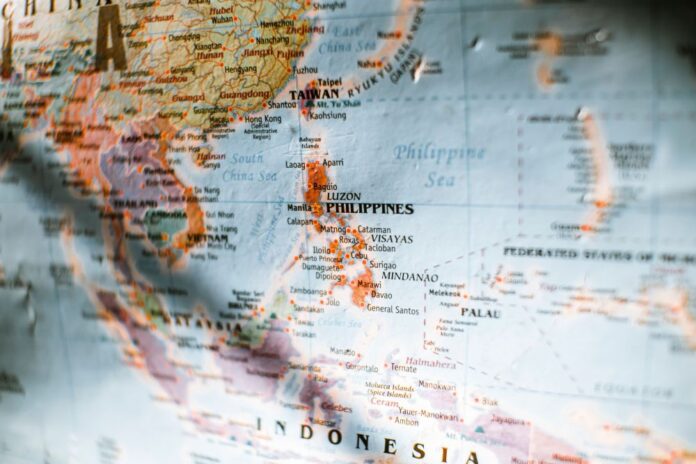
For much of the past half-century, Asia has been one of the most important engines of global economic growth. Japan became a manufacturing powerhouse. South Korea transformed itself into a leader in electronics, automobiles and advanced technology. China emerged as the world’s dominant manufacturing centre, building an industrial economy that reshaped international trade.
Now another chapter is unfolding.
India is expanding its domestic economy while trying to attract more manufacturing. Vietnam has become an increasingly important link in international production networks. Indonesia combines a huge population with natural resources and a growing consumer market. Singapore continues to serve as a financial, logistics and technology hub. Meanwhile, Malaysia, Thailand, the Philippines and Bangladesh are developing their own economic strengths.
These countries are not interchangeable. They have different populations, political systems, infrastructure, industries, financial markets and relationships with global trade.
Yet they share an important feature: their future economic development could influence where companies invest, where supply chains are built and where the next generation of consumers spends its money.
The International Monetary Fund’s September 2026 analysis described the Association of Southeast Asian Nations (ASEAN) as an economic bloc worth approximately US$4.5 trillion, with around 700 million people. It also highlighted the region’s growing role in manufacturing as companies diversify their production networks.
Source: IMF — ASEAN’s Time, September 2026.
For investors, however, economic growth and investment returns are not the same thing. A country can grow rapidly while its stock market performs poorly. A successful manufacturer can create thousands of jobs without generating exceptional returns for shareholders. A rising currency can increase an international investor’s gains, while depreciation can erase them.
To understand Asia’s next phase of growth, it is necessary to look beyond headline GDP figures and examine the economic machinery underneath them.
Why Asia Matters to Global Investors
Asia’s importance rests on several overlapping forces.
The first is demographics. Many Asian economies have large working-age populations, creating opportunities to expand production, employment and consumer spending. Others, including Japan, South Korea and increasingly China, face ageing populations that create different economic challenges.
The second is manufacturing. International companies are diversifying supply chains to reduce dependence on individual countries, improve resilience and access new markets. Southeast Asian economies and India are competing to attract some of this investment.
The third is domestic consumption. As incomes rise, households may spend more on housing, transport, healthcare, education, financial services, travel, entertainment and consumer technology.
The fourth is infrastructure. Ports, roads, railways, airports, power stations, telecommunications networks and digital payment systems determine how efficiently businesses can operate.
Finally, financial development determines how effectively savings become productive investment. Banks, bond markets, stock exchanges, insurance companies and pension funds help direct money towards businesses and infrastructure.
These forces reinforce one another. Better infrastructure can attract factories. Factories create jobs. Employment supports household spending. Higher incomes generate savings, while stronger financial systems help fund the next round of investment.
But the cycle can also break down. Poor infrastructure raises costs, weak governance discourages investment and an unstable currency makes foreign capital more expensive.
The question is which economies can build a self-reinforcing cycle of productivity, investment and rising living standards.
India: A Vast Domestic Market With Global Ambitions
India is one of the most consequential long-term growth stories in the global economy.
Its appeal is partly demographic. With a population exceeding 1.4 billion and a relatively young population by the standards of many major economies, India has the potential to expand both its workforce and its domestic consumer market.
Its scale also creates opportunities that are difficult to replicate elsewhere. A business that succeeds in India may be able to serve hundreds of millions of customers without relying entirely on exports.
But population alone does not guarantee prosperity. The critical challenge is converting India’s demographic potential into productive employment, higher incomes and stronger industrial capabilities.
The consumer opportunity
India’s expanding middle-income population supports demand for a broad range of products and services.
These include consumer electronics, automobiles, healthcare, housing, insurance, banking, packaged food, travel and digital entertainment.
Financial services are particularly important. As more households use formal banking, digital payments, credit and investment products, the potential market for financial companies expands.
Digital infrastructure can also make it easier for businesses to reach customers who previously faced barriers to formal financial services.
However, India’s consumer market is highly diverse. A wealthy urban household and a low-income rural household have very different spending power. The existence of a large population does not mean that every product has a large addressable market.
Investors need to examine household incomes, employment, purchasing power and the distribution of economic gains.
Can India become a larger manufacturing power?
India has long possessed a substantial industrial base, but its manufacturing sector has not reached the same position in global supply chains as China’s.
The opportunity lies in expanding production across electronics, pharmaceuticals, machinery, chemicals, automotive components, defence equipment and other industries.
International companies seeking to diversify production may consider India because of its market size, labour supply and strategic importance.
The government has also pursued industrial policies intended to encourage domestic manufacturing and investment.
Yet manufacturing competitiveness requires more than incentives. Companies need reliable electricity, efficient ports, good roads, skilled workers, predictable regulation and access to suppliers.
India’s logistics and infrastructure have improved in important areas, but performance varies considerably across states and industrial regions. Land acquisition, regulatory complexity and uneven workforce skills can still create obstacles.
The World Bank’s April 2026 India Development Update highlighted the importance of private-sector-led growth and creating productive employment for India’s young population. It also identified higher energy prices and external uncertainty as risks to the outlook.
Source: World Bank — India Development Update, April 2026.
Infrastructure and investment
India’s infrastructure expansion creates opportunities for construction companies, engineering businesses, cement producers, power equipment suppliers, logistics operators and financial institutions.
It can also improve the economics of unrelated businesses by reducing transport times and operating costs.
But infrastructure spending must be evaluated carefully. Projects can suffer from cost overruns, delays, weak demand assumptions or excessive borrowing.
The existence of a large infrastructure programme does not automatically mean every company involved will earn attractive returns.
India’s financial markets
India has a substantial banking system and a large, active stock market. Its listed companies provide exposure to consumer spending, information technology, finance, industrial production and healthcare.
This makes the country accessible to international investors, although valuations, corporate governance, liquidity and sector concentration still matter.
A fast-growing economy can become an expensive investment if share prices already reflect optimistic assumptions about future profits.
Currency depreciation is another consideration. If an Indian company delivers a 12% return in rupees while the rupee loses 8% of its value against the investor’s home currency, the international return will be lower than the local-market return.
The exact result depends on the exchange-rate movement over the investment period.
The central Indian investment question: Can a young workforce, expanding consumer market and improving infrastructure produce enough productivity and corporate earnings growth to justify the prices investors pay?
Indonesia: A Giant Consumer Market and a Strategic Resource Base
Indonesia occupies a distinctive position in Asia’s growth story.
It is Southeast Asia’s largest economy by GDP and home to more than 280 million people. Its geography spans thousands of islands, creating both a large domestic market and significant logistical challenges.
Indonesia’s investment case combines domestic consumption, natural resources, industrial development and infrastructure expansion.
A growing domestic economy
Household spending is an important driver of Indonesian economic activity.
As incomes rise, consumers may spend more on motorcycles, cars, housing, mobile phones, financial services, healthcare, education and leisure.
The country’s large population gives businesses opportunities to scale across a wide range of consumer categories.
Digital services and financial technology can also expand access to payments, lending and online commerce, although credit quality and consumer affordability remain important considerations.
For investors, the key issue is whether rising consumption is supported by durable increases in productivity and household incomes rather than temporary credit expansion or government spending.
Nickel, minerals and industrial development
Indonesia has become strategically important to the global supply chain for nickel, a metal used in stainless steel and some battery chemistries.
The country has pursued policies to encourage more domestic processing rather than simply exporting raw resources.
This can create opportunities in smelting, industrial infrastructure, chemicals, logistics and related manufacturing.
However, resource-based industrialisation comes with trade-offs.
Processing facilities require large amounts of capital and energy. Commodity prices can fluctuate. Environmental impacts can be substantial, and the economics of battery materials can change as technologies and battery chemistries evolve.
A policy designed to encourage domestic processing may also create tensions with trading partners or complicate access to certain international markets.
Investors should therefore distinguish between the value of a country’s mineral resources and the profitability of individual businesses built around them.
Infrastructure: Connecting an enormous archipelago
Indonesia’s geography makes infrastructure especially important.
Ports, roads, electricity networks and transport links can reduce the cost of moving people and goods between islands. Better infrastructure can help businesses reach customers, improve industrial productivity and make new regions more attractive for investment.
However, projects can be expensive, and the benefits may take years to materialise. The commercial viability of a new industrial zone or transport corridor depends on whether sufficient demand develops.
Government-backed investment can help overcome coordination problems, but investors must also assess public finances, project selection and the allocation of risks between government and private companies.
Financial development and governance
Indonesia has a substantial banking sector and a growing domestic investment market, but access to capital, market liquidity and corporate transparency vary.
Foreign investors also need to monitor regulatory predictability and the relationship between government policy and commercial interests.
In October 2026, the Financial Times reported concerns about transparency, market liquidity and investor confidence in Indonesia’s stock market. The report discussed scrutiny of the country’s new sovereign investment fund, Danantara, and the importance of clearer disclosures and governance arrangements.
Source: Financial Times — Indonesia sovereign wealth fund calls for stock market transparency, October 2026.
These issues matter because foreign capital depends on confidence that investors can understand company ownership, assess financial statements and rely on reasonably predictable rules.
The central Indonesian investment question: Can the country convert its consumer scale and natural resources into diversified, productive industries while maintaining confidence in its financial markets and public finances?
Vietnam: Manufacturing, Exports and the China+1 Strategy
Vietnam has become an important part of the global manufacturing landscape.
Its appeal comes from a combination of industrial development, export-oriented production, international trade relationships and participation in Asian supply chains.
Electronics, electrical equipment, textiles, footwear, furniture and other manufactured goods play important roles in its export economy.
International manufacturers have expanded production in Vietnam as they diversify their operations across multiple countries.
This strategy is often called China+1: rather than abandoning China entirely, companies add production capacity elsewhere to reduce their dependence on a single manufacturing location.
Vietnam is one of the countries that has benefited from this shift.
Why manufacturers choose Vietnam
Manufacturers consider labour costs, worker availability, infrastructure, supplier networks, trade agreements, taxation and regulatory conditions when deciding where to build factories.
Vietnam offers an established export-manufacturing base and proximity to major Asian supply chains.
Its integration into international trade gives it access to overseas customers, while foreign investment can bring capital, technology and production expertise.
The opportunity extends beyond assembling finished goods. Over time, Vietnam could capture more value through domestic suppliers, industrial engineering, component manufacturing, logistics and technical services.
That transition is important. A country gains more lasting economic value when local firms develop capabilities rather than relying primarily on imported components and foreign-owned assembly operations.
The limits of export-led growth
Vietnam’s success also creates vulnerabilities.
A large share of its industrial activity depends on foreign demand. If consumers in major export markets reduce spending, Vietnamese factories may experience falling orders.
Trade disputes can create additional uncertainty. Governments may investigate the origin of goods, impose tariffs or scrutinise whether products genuinely qualify for preferential trade treatment.
Vietnam’s trade relationship with the United States illustrates this exposure. In October 2026, Reuters reported that Vietnamese officials were seeking to conclude trade negotiations with the United States amid questions about market access, rules of origin and regulatory issues.
Source: Reuters — Vietnam says trade talks with US nearly completed, October 2026.
Vietnam also needs reliable electricity, efficient ports, skilled workers and stronger domestic supplier networks to keep moving up the manufacturing value chain.
If industrial expansion outpaces power generation or transport capacity, operating costs can rise and investment plans may be delayed.
The currency and financial-market question
Vietnam’s export sector can benefit from competitive production costs, but currency depreciation has mixed effects.
A weaker Vietnamese dong can make some exports cheaper for foreign buyers. At the same time, it increases the local-currency cost of imported machinery, fuel and components, and can make foreign-currency debt more expensive to service.
For foreign investors, depreciation can reduce returns even when local businesses perform well.
Vietnam’s capital markets are also developing. Investors need to examine liquidity, disclosure quality, shareholder protections, access to reliable financial information and the practical ability to enter or exit positions.
The central Vietnamese investment question: Can the country move from being an attractive location for export assembly to a deeper industrial economy with stronger domestic suppliers, technical expertise and locally generated value?
Singapore: The Financial Centre Behind the Region
Singapore differs fundamentally from India, Indonesia and Vietnam.
It has a small domestic population and limited land, but its role in international finance, trade, shipping, aviation, logistics and business services gives it influence far beyond its physical size.
Singapore is not primarily a story about a vast new consumer market. It is a story about the institutions and infrastructure that allow international capital and commerce to operate.
Finance, trade and business services
Singapore hosts banks, asset managers, insurers, commodity traders, multinational headquarters and professional services firms.
Its appeal includes established financial infrastructure, international connectivity, a skilled workforce and a regulatory framework that businesses can use to manage operations across Asia.
Companies operating in multiple countries may use Singapore as a regional base for treasury management, financing, logistics coordination and investment.
As other Asian economies expand, demand for these services can also grow.
Technology and advanced manufacturing
Singapore is also involved in semiconductor production, electronics, pharmaceuticals, biotechnology and other higher-value industries.
Its limited labour supply and high operating costs make it less suited to competing with lower-cost economies on mass-market manufacturing alone.
Instead, it tends to focus on activities where skills, reliability, research capabilities and technological sophistication matter.
This creates opportunities in specialised industrial production, research, engineering and technology infrastructure.
The advantages — and limits — of a financial hub
Singapore’s financial markets and institutions are relatively developed, but the economy remains exposed to global trade and financial conditions.
A slowdown in international commerce can reduce demand for shipping, trade finance and business services. Global financial volatility can affect asset-management activity, investment flows and corporate confidence.
Singapore’s ageing population and limited domestic labour pool also create challenges. Maintaining productivity requires investment in skills, technology and higher-value industries.
For investors, Singapore can provide access to established businesses and financial infrastructure, but it is not a substitute for exposure to the faster-changing consumer and manufacturing markets elsewhere in Asia.
The central Singaporean investment question: Can the country continue capturing high-value financial, technological and commercial activity as competition between international business centres intensifies?
Beyond the Big Four: Other Asian Economies to Watch
Asia’s growth story extends well beyond India, Indonesia, Vietnam and Singapore.
Different economies offer exposure to different parts of the region’s industrial and consumer development.
Malaysia: Semiconductors and advanced manufacturing
Malaysia has established capabilities in electronics manufacturing and semiconductor assembly, testing and packaging. It also has important industrial, energy and services sectors.
As demand for electronics and advanced computing equipment expands, Malaysia may benefit from investment in manufacturing facilities, industrial equipment and supporting infrastructure.
Its future opportunities depend partly on moving into higher-value activities, improving workforce capabilities and maintaining a competitive investment environment.
Investors should consider the cyclical nature of electronics demand and the risk that new investment does not always produce sustained pricing power.
Thailand: Automotive production, tourism and industrial upgrading
Thailand has a substantial automotive and industrial base, alongside an important tourism economy.
The shift towards electric vehicles creates both opportunities and challenges. New investment in electric-vehicle production and components could support industrial upgrading, but established manufacturers and suppliers may face pressure as technologies change.
Tourism also creates a different source of growth from export manufacturing, bringing foreign spending into hospitality, transport, retail and services.
Thailand’s ageing population and household debt levels are important constraints to consider when assessing long-term consumer demand.
The Philippines: Demographics and services
The Philippines has a relatively young population and an established services economy, including business-process outsourcing and other internationally traded services.
Its opportunities include consumer spending, digital services, healthcare, education, infrastructure and tourism.
Remittances from Filipinos working overseas also support household income and consumption.
However, infrastructure gaps, exposure to natural disasters and the need for more productive employment remain important challenges. A young population becomes an economic advantage only when workers can access education, suitable jobs and rising wages.
Bangladesh: Manufacturing and employment
Bangladesh has developed a substantial export-oriented garment industry, creating employment and supporting economic development.
Its longer-term opportunity lies partly in diversifying beyond clothing into higher-value manufacturing and services.
That transition requires improved infrastructure, reliable energy, worker skills, financial stability and predictable trade access.
Concentrated exports can leave an economy vulnerable to changes in global demand, buyer behaviour and trade preferences. Financial-sector weaknesses and governance concerns can also affect the availability and cost of investment capital.
China: Still central to the Asian growth story
Although this article focuses on the next wave of growth, China remains essential to understanding the region.
Its manufacturing ecosystem, infrastructure, technology capabilities and large domestic market influence suppliers and competitors throughout Asia.
At the same time, China faces structural challenges, including an ageing population, pressure in parts of the property sector and the need to strengthen domestic consumption.
Changes in Chinese demand can affect commodity exporters, tourism markets, industrial suppliers and regional trade.
China’s future is therefore not separate from the rise of other Asian economies. It is one of the forces shaping their opportunities.
Comparing the Investment Cases
The following table summarises the main economic characteristics discussed in this article. It is a qualitative comparison, not a ranking of expected stock-market returns.
| Economy | Main growth drivers | Demographic and consumer profile | Key investment questions |
|---|---|---|---|
| India | Domestic consumption, services, infrastructure, manufacturing | Large, relatively young population; wide differences in income and purchasing power | Can employment, productivity and manufacturing expand fast enough to sustain rising incomes? |
| Indonesia | Consumer spending, minerals, processing, infrastructure | Large domestic market with a growing need for transport and urban infrastructure | Can resource wealth support diversification, while governance and fiscal risks remain manageable? |
| Vietnam | Export manufacturing, electronics, supply-chain diversification | Manufacturing workforce and domestic market expanding alongside industrialisation | Can local suppliers and skills capture more value, and can export dependence be managed? |
| Singapore | Finance, logistics, trade, technology and advanced manufacturing | Small, high-income, ageing population | Can the country retain high-value activities despite high costs and global trade volatility? |
| Malaysia | Electronics, semiconductors, industrial production, services | Established industrial economy with a developing consumer market | Can investment move into higher-value production and technology capabilities? |
| Thailand | Manufacturing, automotive supply chains, tourism and services | Established consumer economy facing demographic ageing | Can industrial upgrading and productivity offset ageing and household-debt pressures? |
| Philippines | Services exports, consumer spending, remittances, infrastructure | Relatively young population with a growing labour force | Can employment quality, infrastructure and productivity improve sufficiently? |
| Bangladesh | Garments, export manufacturing, employment | Large workforce with significant potential for industrial development | Can exports diversify and infrastructure and financial stability improve? |
| China | Manufacturing, technology, infrastructure and domestic demand | Huge market with an ageing population | Can domestic demand strengthen while property-sector and demographic pressures are managed? |
The table reveals an important point: these economies are not necessarily competing for the same investment.
An investor interested in consumer finance may focus on different businesses from an investor seeking semiconductor exposure. An infrastructure investor may care about project financing and regulation, while an export-manufacturing investor may prioritise logistics, labour productivity and trade access.
The right comparison begins with the type of business and economic activity being evaluated.
Demographics: The Power of a Growing Workforce
Population growth is often presented as one of Asia’s greatest advantages.
The logic is understandable. A growing working-age population can expand production, support tax revenue and create new consumers.
But demographics are an opportunity, not a guarantee.
A young population requires education, healthcare, housing, transport and employment. If the economy cannot create enough productive jobs, demographic growth can place pressure on public services and household finances.
Conversely, a country with slower population growth can still become more prosperous if productivity rises through automation, better education, technology and capital investment.
Productivity matters more than population alone
Imagine two economies with the same number of workers.
In the first, workers use outdated equipment, spend hours travelling to work and have limited access to training. In the second, workers have better machinery, reliable electricity, modern logistics and more effective management.
The second economy may produce much more output from the same number of people.
This is why infrastructure, education, technology and business organisation are so important to Asia’s future.
For investors, the key indicators include labour-force participation, wages, productivity, education quality, formal employment and the ability of businesses to adopt new technology.
Manufacturing: Can Asia Move Up the Value Chain?
Manufacturing can transform an economy by bringing investment, employment, technology and export revenue.
However, not all manufacturing activities create the same economic value.
A factory assembling imported components may generate employment and export revenue, but much of the value may accrue to foreign suppliers and intellectual-property owners.
A more developed industrial ecosystem can include domestic component manufacturers, engineering services, industrial software, research facilities, specialised logistics and locally developed products.
These activities can help a country capture a greater share of the value generated by its supply chains.
From low-cost production to industrial capability
The transition generally requires investment in technical education, reliable infrastructure, access to finance and consistent regulation.
It also depends on whether domestic businesses can compete on quality and productivity rather than relying indefinitely on low labour costs.
This is one reason foreign investment needs to be examined beyond its headline dollar value.
A large factory investment may create significant employment, but its longer-term economic contribution depends on local supplier relationships, worker training, technology transfer and the durability of production.
Supply-chain diversification is not automatic growth
The China+1 strategy creates opportunities, but international companies do not relocate production solely because a government offers incentives.
They also need suppliers, ports, skilled workers, dependable electricity and access to customers.
Some companies may spread production across several countries. Others may keep most of their manufacturing in China while moving only selected activities elsewhere.
For Asian economies, the challenge is to become reliable and competitive production locations rather than assuming that geopolitical tensions will automatically deliver investment.
Infrastructure: The Foundation Beneath the Growth Story
Infrastructure can determine whether an economy’s other advantages translate into commercial success.
A country may have a large workforce, competitive wages and access to overseas markets, but factories cannot operate efficiently without reliable power and transport.
Ports and roads influence shipping costs. Railways connect industrial regions with markets. Electricity networks determine whether manufacturers can maintain production. Telecommunications support digital services and modern business operations.
The economic multiplier
Infrastructure investment can support construction and employment directly, while also improving the productivity of other industries.
A new port may reduce freight delays. Better roads can expand the area from which a factory can recruit workers. A more reliable power network can reduce downtime and the need for expensive backup systems.
These benefits can attract further private investment.
However, infrastructure is expensive, and its returns are often realised over many years.
Projects funded through excessive borrowing can place pressure on government finances. Poorly selected projects may fail to generate enough economic activity to justify their costs.
For investors, the most important distinction is between infrastructure that removes a genuine economic bottleneck and infrastructure that depends on optimistic assumptions about future demand.
Financial Development: Turning Economic Growth Into Investment Returns
A growing economy needs a financial system capable of moving money from savers to productive businesses.
Banks provide loans and payment services. Bond markets help governments and companies borrow. Stock markets allow businesses to raise equity and investors to participate in corporate growth. Insurance companies and pension funds can provide long-term pools of capital.
When these systems function well, businesses can finance expansion and households can access savings, insurance and credit products.
But financial development also creates risks.
Rapid lending can produce property bubbles. Weak underwriting can lead to bad loans. Poorly regulated financial institutions may take excessive risks. Opaque corporate ownership can make it difficult for investors to understand who controls a company.
The importance of market access
An economy can grow rapidly without offering foreign investors an easy way to participate in that growth.
Some businesses may be privately owned. Others may be state-controlled or listed on exchanges with limited liquidity. Foreign ownership restrictions, capital controls and differences in accounting or disclosure practices can complicate investment.
Even where access is straightforward, investors must consider valuations.
A country’s economy may expand quickly while its stock market delivers disappointing returns because shares were purchased at excessive prices, corporate profits grew more slowly than expected or existing shareholders were diluted by new equity issuance.
The lesson is that investors need to distinguish between the growth of an economy, the growth of its companies and the returns available from securities at current prices.
The Currency Problem: When Growth Fails to Reach Foreign Investors
Currency risk is one of the most important considerations when investing across Asia.
A local stock market may rise while the local currency falls against the investor’s home currency.
The foreign-currency return depends on both movements.
Consider a simplified example.
An international investor buys shares in an Asian market. Over one year, the shares rise by 15% in local-currency terms, but the currency loses 10% of its value against the investor’s home currency.
The investment’s return in the home currency would be approximately 3.5%, before fees, taxes and other costs.
The calculation is:
[
(1.15 \times 0.90)-1 = 0.035
]
The example shows how currency depreciation can substantially reduce an otherwise strong local-market return.
Why currencies depreciate
Currencies can weaken for several reasons, including:
- Higher interest rates in the United States or other major economies, which make foreign assets relatively more attractive.
- Capital outflows, as investors sell local assets and convert the proceeds into another currency.
- Rising energy import costs or a deteriorating trade balance.
- Political uncertainty or concerns about economic policy.
- High inflation or doubts about central-bank credibility.
- Concerns about government borrowing, external debt or financial stability.
These forces can reinforce one another. Currency weakness can increase the local cost of imported fuel and machinery, pushing inflation higher. Higher inflation can complicate interest-rate decisions, while investor uncertainty may place further pressure on the exchange rate.
Why a weaker currency is not always bad
Depreciation can also make exports cheaper for overseas customers and increase the local-currency value of foreign earnings.
However, the benefits depend on how much production uses imported inputs, whether companies have foreign-currency debt and how much pricing power they possess.
For foreign investors, the important question is whether a company’s earnings growth can outweigh the currency risk over the investment horizon.
A strong business in a depreciating-currency economy may still offer attractive opportunities, but its local share-price performance is only part of the analysis.
Political Instability, Weak Governance and the Cost of Uncertainty
Economic growth requires investment, and investment requires some confidence about the future.
Businesses build factories, develop infrastructure and train workers based on assumptions about future demand, regulation, taxes and operating conditions.
When those assumptions become unreliable, companies may delay investment or demand higher returns to compensate for risk.
Policy uncertainty
Changes to taxes, tariffs, ownership rules, export restrictions or industry regulations can alter a business’s economics.
Sometimes policy changes are necessary and beneficial. The issue for investors is whether rules are transparent, reasonably predictable and applied consistently.
A business that depends on a government licence or subsidy may face a different risk profile from one operating in a more competitive and diversified market.
Investors should examine the legal framework, regulatory institutions and practical enforcement rather than relying solely on official statements about investment incentives.
Corruption and corporate governance
Weak governance can create costs through opaque procurement, conflicts of interest, related-party transactions and poor disclosure.
A company may appear profitable while its accounts conceal liabilities or transactions that benefit controlling shareholders at the expense of minority investors.
In markets with concentrated ownership, foreign investors need to understand whether their interests are adequately protected.
This is not a problem unique to emerging Asia. Governance risks exist in developed markets too. The practical task is to identify how those risks affect the particular company, sector and country being evaluated.
Political risk is not the same as economic failure
Political systems differ across Asia, and investors should avoid assuming that a single political model determines economic success.
What matters for a specific investment includes policy continuity, institutional capacity, contract enforcement, regulatory transparency and the ability to resolve disputes.
A country can maintain strong growth while facing political or governance challenges. Equally, a stable political environment does not guarantee strong productivity or attractive investment returns.
The purpose of political-risk analysis is not to label entire countries as safe or unsafe. It is to understand how institutions and policy decisions affect business economics.
The Global Risks That Could Slow Asia’s Rise
Even well-managed economies cannot fully control the international environment.
Several global forces could influence the region’s growth over the coming years.
Trade tensions and tariffs
Asian manufacturers depend heavily on international trade.
Tariffs can make exports more expensive, disrupt established supply chains and encourage companies to reconsider where they produce goods.
Some countries may gain new orders as production shifts elsewhere, but the benefits are not guaranteed. Trade restrictions can also reduce demand, increase input costs or expose companies to new investigations.
China and the wider regional economy
China remains a major source of demand, investment and industrial inputs across Asia.
A prolonged slowdown in Chinese domestic demand could affect commodity exporters, tourism businesses and manufacturers supplying Chinese firms.
At the same time, China’s technological capabilities and industrial ecosystem create competitive pressure for manufacturers elsewhere in the region.
Other Asian economies must therefore balance cooperation with China against the need to diversify customers, suppliers and sources of investment.
Energy prices and external shocks
Many Asian economies import substantial quantities of energy.
Higher oil and gas prices can increase transport and industrial costs, reduce household purchasing power and worsen trade balances.
For countries with limited fiscal room, attempts to subsidise energy can place additional pressure on public finances.
The effects vary by country, depending on its energy mix, export industries, exchange rate and government policy.
Higher global interest rates
If major central banks keep interest rates elevated, global borrowing costs can remain high.
This may make it more expensive for Asian companies to finance projects and for governments to fund infrastructure.
Higher returns on safer assets can also encourage international investors to reduce exposure to riskier markets, putting pressure on share prices and currencies.
Countries with strong domestic savings, credible monetary policy and manageable external debt may be better placed to withstand these shifts, but no economy is entirely insulated.
The Asian Development Bank’s September 2026 outlook identified trade uncertainty, geopolitical conflict, energy prices and financial-market volatility among the risks facing developing Asia.
Source: Asian Development Bank — Asian Development Outlook, September 2026.
How Investors Can Evaluate Asia’s Next Growth Markets
A useful investment framework should go beyond the question of which economy has the highest projected GDP growth.
Instead, examine several connected factors.
Demographics: Is the working-age population growing? Are workers gaining skills? Can the economy create productive employment?
Productivity: Are businesses becoming more efficient? Is infrastructure improving? Are firms moving into higher-value activities?
Domestic demand: Are household incomes and purchasing power increasing? Is consumer growth supported by employment and productivity?
Manufacturing and trade: Is the country attracting durable investment? Are local suppliers developing? Is export demand diversified?
Infrastructure: Are transport, electricity and digital networks reliable enough to support growth?
Financial development: Can businesses raise capital efficiently? Are accounting, disclosure and shareholder protections credible? Are financial risks being managed?
Public finances: Can the government fund its commitments without creating excessive debt or destabilising financial conditions?
Currency and external exposure: Does the country rely heavily on imported energy, foreign financing or short-term capital flows? How would a stronger US dollar affect it?
Valuations: How much future growth is already reflected in stock prices? Are expected profits realistic?
These questions can be applied to individual companies as well as entire markets.
They also help explain why an economy with moderate growth can sometimes offer better investment opportunities than a faster-growing market whose businesses are expensive, heavily indebted or exposed to unstable regulation.
Conclusion: Asia’s Next Wave Will Not Be One Single Story
Asia’s economic rise is not a race in which one country must replace another.
India’s scale creates opportunities in domestic consumption, services, infrastructure and manufacturing. Indonesia combines a large consumer market with strategic natural resources. Vietnam has become an important manufacturing and export hub. Singapore provides the financial and commercial infrastructure that helps international capital move through the region.
Malaysia, Thailand, the Philippines, Bangladesh and China each contribute different capabilities, markets and risks.
The region’s long-term prospects depend on whether its economies can turn demographic potential into productive employment, infrastructure into efficiency, foreign investment into domestic industrial capabilities and rising incomes into sustainable consumer demand.
But growth does not eliminate risk. Weak governance, political uncertainty, currency depreciation, excessive borrowing and expensive stock valuations can all reduce the returns available to investors.
The most important distinction is between an economy that is growing and an investment that is attractively priced.
The next wave of Asian growth may create extraordinary businesses and new global industries. Identifying the beneficiaries requires looking beyond population figures and GDP forecasts to understand how companies compete, how governments manage risk and how much of the economic progress can ultimately reach shareholders.
For investors, the opportunity is not simply to bet on Asia. It is to understand the different economic engines operating across the region — and to determine which businesses are positioned to turn those engines into durable profits.

