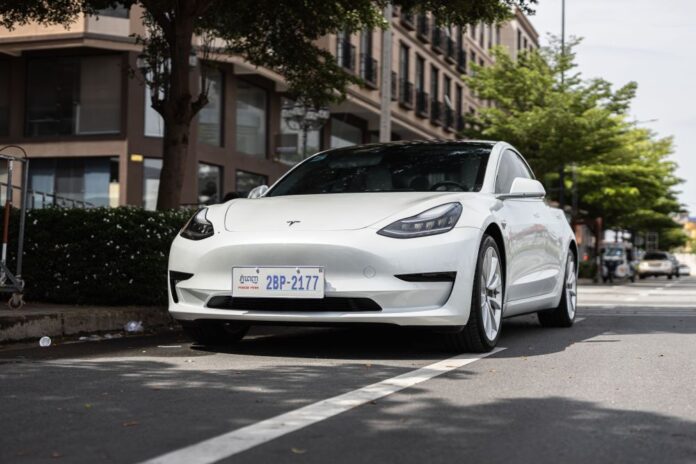
Tesla is one of the most closely watched companies in the world. Once regarded primarily as an electric vehicle manufacturer, it is now attempting to build a much broader business spanning battery storage, autonomous driving, artificial intelligence and robotics.
For investors, this creates an unusual challenge. Tesla’s shares are influenced not only by its current vehicle sales and profits, but also by expectations about businesses that may become significant sources of revenue in the future.
Understanding Tesla therefore requires looking at two separate questions: how well is the existing business performing, and how much future success is already reflected in the share price?
Understanding Tesla’s Business
Tesla’s core business remains the design, manufacture and sale of electric vehicles. Its Model 3 and Model Y account for the vast majority of its vehicle deliveries, while its other models target different parts of the market.
The company also operates a growing energy business that sells battery storage systems, including large-scale products used by utilities and businesses. Its charging network, vehicle software, maintenance services and other activities contribute additional revenue.
Beyond these established operations, Tesla is investing heavily in autonomous driving, robotaxis, humanoid robots and artificial intelligence infrastructure.
These activities matter because they have different economic characteristics. Manufacturing cars requires factories, materials, logistics and continuous product development. Software can potentially generate recurring revenue with lower costs for each additional customer. A successful robotaxi network could create an entirely different business model, although its commercial potential remains dependent on technical, regulatory and economic challenges.
Investors must distinguish between revenue Tesla generates today and revenue that management hopes to generate in the future.
What Do Tesla’s Financial Results Tell Us?
Tesla’s second-quarter 2026 results illustrate why revenue growth alone does not tell the whole story.
The company reported approximately $28.24 billion in quarterly revenue, an increase of around 26% compared with the same period a year earlier. However, operating income fell to approximately $398 million, compared with $923 million in the second quarter of 2025. Its operating margin declined from 4.1% to approximately 1.4%.
These figures reveal an important issue: Tesla was generating substantially more revenue, but considerably less operating profit relative to its sales. Higher expenses, pressure on vehicle economics and increased investment all deserve attention.
The company also reported approximately $1.1 billion in GAAP net income for the quarter. Its non-GAAP adjusted earnings per share were $0.33, below the expectations reported by several financial outlets at the time.
Investors should examine these measures together rather than focusing on a single headline number. Revenue indicates the scale of the business, operating income measures profitability from operations, and earnings per share helps show the profit attributable to each share.
Sources: Tesla’s second-quarter 2026 financial update and Tesla’s investor relations website.
Vehicle Deliveries: Demand Matters, but Margins Matter Too
Tesla delivered 486,532 vehicles in the third quarter of 2026, according to its October 2 delivery announcement. This was a useful indicator of demand and production activity, but it was not a complete picture of financial performance.
A company can sell more vehicles without increasing profits if it cuts prices, offers incentives or experiences higher production costs. Changes in the mix of models sold, geographic demand and currency movements can also affect profitability.
Competition is another important factor. Traditional car manufacturers and newer electric vehicle companies are competing for customers, particularly in China, Europe and other major markets. Tesla must continue to make its products attractive on price, performance, technology, charging access and overall ownership experience.
Investors should therefore compare vehicle deliveries with average selling prices, automotive gross margins, inventory levels and operating income. If deliveries rise while margins deteriorate, the quality of that growth deserves closer examination.
Tesla’s next quarterly financial results are scheduled for October 21, 2026. Those results should provide a clearer picture of how its third-quarter deliveries translated into revenue, earnings and cash flow.
Source: Tesla’s third-quarter 2026 delivery announcement.
The Energy Business: A Different Source of Growth
Tesla’s energy storage business is worth watching because it gives the company exposure to a market beyond passenger vehicles.
Large battery systems can help utilities and businesses store electricity, manage peak demand and support renewable energy generation. As electricity demand and renewable energy capacity grow, energy storage could become increasingly important.
Tesla reported deploying 13.7 gigawatt-hours of energy storage products in the third quarter of 2026. However, deployment volumes do not automatically translate into higher profits. Investors should examine revenue, gross margins, manufacturing costs and the amount of capital required to expand production.
The important question is whether the energy business can become a durable source of profitable growth, rather than simply a larger business.
Artificial Intelligence, Robotaxis and Robotics
Tesla’s long-term investment story increasingly depends on technology beyond conventional car manufacturing.
Its autonomous driving ambitions could eventually support robotaxi services, while its Optimus humanoid robot programme aims to develop machines capable of performing useful physical tasks. The company is also investing in computing infrastructure, software and AI-related capabilities.
These projects offer potential opportunities, but they carry substantial uncertainty.
Autonomous vehicles must operate safely and reliably in complicated real-world environments. Their commercial deployment also depends on regulatory approval, insurance arrangements, customer acceptance and the economics of operating a fleet.
Humanoid robots face a different set of challenges, including manufacturing costs, reliability, useful capabilities and the ability to perform tasks consistently outside controlled demonstrations.
Investors should pay attention to measurable progress: paying customers, commercial deployments, operating costs, production volumes and revenue. Announcements, demonstrations and ambitious targets can indicate direction, but they are not substitutes for proven commercial results.
Tesla’s Valuation: What Are Investors Paying For?
Valuation is one of the most important and difficult parts of analysing Tesla.
A traditional car manufacturer is often valued largely on its expected earnings, cash flow, production volumes and competitive position. Tesla’s share price has also reflected expectations that it could become a significant player in autonomous transportation, AI and robotics.
That means investors may be paying for future growth that has not yet translated into substantial profits.
For example, a price-to-earnings ratio compares a company’s share price with its earnings per share. A high ratio means investors are paying a large amount for each dollar of current or expected profit. This can be justified if earnings grow rapidly over time, but it can also leave a stock vulnerable if growth disappoints.
Other useful measures include enterprise value relative to operating earnings, free-cash-flow yield and the company’s valuation compared with its historical levels and relevant competitors.
For Tesla, the central valuation question is how much of its future success is already priced into the shares. Even if the company performs well operationally, investors could experience disappointing returns if its future earnings fall short of the expectations embedded in the price.
Conversely, better-than-expected commercial progress could change how investors value the business.
Capital Spending and Cash Flow
Tesla’s future plans require substantial investment in factories, batteries, AI computing, robotics and other infrastructure.
Spending on these projects may support future growth, but it also competes with other uses of cash, including strengthening the balance sheet and returning capital to shareholders.
Free cash flow is particularly useful to monitor. It generally measures cash generated from operations after capital expenditure. A company can report accounting profits while producing limited free cash flow if it is spending heavily on expansion.
Negative free cash flow is not automatically a sign of a weak business: investment can be rational when it creates valuable future capacity. The crucial question is whether the eventual returns justify the money spent.
Investors should compare capital expenditure with operating cash flow, examine liquidity and debt, and look for evidence that major projects are producing the commercial benefits management expects.
The Major Risks Investors Should Consider
Tesla faces several risks that could affect both its financial performance and share price.
Competition and pricing: Rivals may put pressure on vehicle prices and margins.
Execution risk: New factories, energy products and advanced technologies may take longer or cost more to develop than anticipated.
Technology and regulation: Autonomous driving and robotics depend on technical progress, safety standards and regulatory decisions.
Leadership and governance: Tesla’s future is closely associated with Elon Musk. Investors may consider leadership focus, succession planning, executive incentives and the company’s dependence on key individuals.
Market expectations: A highly valued stock can be sensitive to disappointing results, even when the underlying business continues to grow.
Economic conditions: Interest rates, consumer financing costs, economic growth and changes in government policy can influence demand for vehicles and the valuation investors place on growth companies.
What Should Investors Watch Next?
For a balanced assessment, investors can monitor several indicators over the coming quarters:
- Vehicle deliveries, average selling prices and automotive gross margins.
- Operating income, earnings per share and free cash flow.
- Energy storage deployments and energy business profitability.
- Capital expenditure and the returns expected from new projects.
- Measurable progress in robotaxis, autonomous driving and robotics.
- Changes in valuation relative to earnings and realistic long-term growth scenarios.
It is also useful to consider different scenarios. What would Tesla’s valuation look like if its vehicle business grew steadily but its autonomous driving ambitions took longer to deliver? What if energy storage expanded rapidly? What if margins recovered, or competition forced further price reductions?
Scenario analysis helps investors understand which assumptions matter most without pretending that the future can be predicted precisely.
Conclusion: A Company With Several Possible Futures
Tesla is no longer simply a story about electric cars. Its existing vehicle business, energy storage operations and ambitions in AI, robotaxis and robotics create several potential paths for future growth.
But those opportunities must be evaluated alongside current profitability, capital requirements, competitive pressures and the share price investors are being asked to pay.
The most useful analysis separates what Tesla has already demonstrated from what it still needs to prove. Financial statements provide evidence of current performance; delivery figures help measure demand; and commercial results from newer businesses will show whether its technological ambitions can become meaningful sources of profit.
Ultimately, the decision depends on each investor’s assessment of Tesla’s future earnings, the risks involved, the valuation and the alternatives available. The purpose of analysing these factors is not to tell investors what to do, but to give them the information needed to reach their own conclusions.

