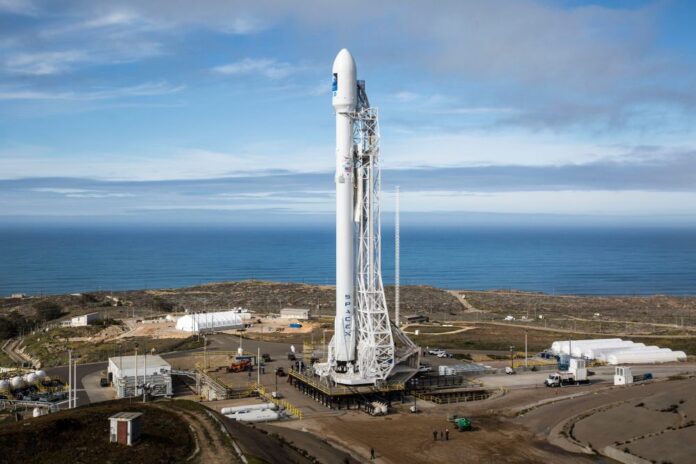
SpaceX has transformed the commercial space industry by making rocket launches more frequent, developing reusable spacecraft and building a satellite internet network that serves customers around the world. Founded by Elon Musk in 2002, the company has expanded from an ambitious launch provider into a business spanning aerospace, telecommunications, government contracts and artificial intelligence.
Its potential is enormous, but so are the financial and technological challenges involved in its ambitions.
For investors, SpaceX presents an unusual combination. It has established businesses generating substantial revenue, including its launch operations and Starlink satellite internet service. At the same time, it is spending heavily on next-generation rockets, AI infrastructure and other projects whose eventual profitability remains uncertain.
SpaceX became publicly traded on the Nasdaq in June 2026 under the ticker SPCX, following an initial public offering that raised approximately $85.7 billion, including the full exercise of the underwriters’ additional-share option. Its transition to the public markets means investors can now evaluate the company’s financial disclosures and market valuation directly. SpaceX’s official IPO announcement.
Understanding SpaceX’s Business
SpaceX is no longer simply a rocket manufacturer. Its business has several distinct parts, each with different revenue sources, costs and growth opportunities.
Rocket launches and space transportation
SpaceX’s Falcon 9 rocket has become one of the most important vehicles in the commercial launch market. Its reusable first stage can return to Earth and fly again, helping the company conduct launches more frequently and spread certain manufacturing costs across multiple missions.
Customers include commercial satellite operators, NASA, the US Department of Defense and other government organisations. These customers pay SpaceX to launch satellites, cargo and spacecraft into orbit.
The company also operates Falcon Heavy, designed to carry larger payloads, and is developing Starship, a much larger launch and transportation system.
The economics of reusable rockets are central to the SpaceX story. Traditional rockets were largely expendable, meaning much of the hardware was discarded after a launch. Reusability can reduce the cost of hardware per mission, although refurbishment, maintenance, recovery and operational expenses still matter.
SpaceX’s established launch business provides an important foundation for its wider ambitions. However, investors should distinguish between the economics of its existing Falcon rockets and the future potential of Starship, which requires further development and substantial investment.
Starlink: The satellite internet business
Starlink may be the most important part of SpaceX’s commercial business.
The service uses a large constellation of satellites in low Earth orbit to provide broadband internet to households, businesses, ships, aircraft and other customers. Unlike traditional satellite internet systems that rely on satellites much farther from Earth, Starlink’s lower orbital altitude helps reduce communication latency.
Its potential market extends beyond remote households. Telecommunications operators, airlines, shipping companies, businesses and government organisations all have reasons to seek connectivity in locations where conventional networks are limited or unavailable.
Starlink also provides SpaceX with recurring subscription revenue. That is an important difference from rocket launches, where revenue is generally tied to individual missions and contracts.
According to Reuters’ June 2026 analysis of SpaceX’s financial disclosures, Starlink accounted for roughly 60% of the company’s 2025 revenue, with approximately 10.3 million users at that time. This makes the satellite internet business a major contributor to the company’s overall financial performance.
Source: Reuters’ analysis of SpaceX’s businesses and financial results.
For investors, the important questions include how quickly subscriber numbers are growing, how much revenue each customer generates, what it costs to deploy and replace satellites, and whether Starlink can maintain attractive margins as it enters new markets.
Government and defence contracts
SpaceX also has a significant role in national security and government space programmes.
Its launch services support satellite deployments, while its Starshield activities target government and defence customers. These contracts can provide long-term demand and establish relationships that are difficult for new competitors to replicate quickly.
Government work is not without risk, however. Contracts may involve demanding technical requirements, regulatory oversight, political considerations and significant development costs. Procurement priorities can also change.
Investors should examine how much revenue comes from government customers, how contracts are structured and whether the company can deliver projects within their expected budgets and schedules.
SpaceX’s Financial Performance
Financial results are particularly important because SpaceX’s public valuation reflects expectations extending well beyond its existing rocket business.
In 2025, SpaceX reported approximately $18.67 billion in revenue, according to Reuters’ reporting around its IPO. Despite that scale, the company recorded a net loss of approximately $4.94 billion for the year, following a reported profit of $791 million in 2024.
The change was heavily influenced by the company’s acquisition of AI business xAI and the costs associated with its expanding technology ambitions.
Its second-quarter 2026 results showed strong revenue growth. SpaceX reported $7.8 billion in quarterly revenue, up approximately 92% from $4.1 billion in the same quarter a year earlier. It also reported a net loss of $541 million, an improvement from the $1.0 billion loss in the prior-year quarter, and adjusted EBITDA of $3.5 billion.
Adjusted EBITDA measures earnings before interest, taxes, depreciation and amortisation, with certain adjustments. It can help investors understand operating performance, but it is not the same as net profit or free cash flow. It also does not fully capture the cost of major investments.
Sources: SpaceX’s second-quarter 2026 results and its quarterly SEC filing.
These figures highlight an important feature of SpaceX: rapid growth does not automatically mean the company is consistently profitable. Investors need to understand what is driving revenue growth, how much the business spends to achieve it and whether those investments eventually generate adequate returns.
Starship: A Potentially Transformative Project
Starship is central to SpaceX’s longer-term strategy.
Designed as a fully reusable transportation system, it is intended to carry crew and cargo to Earth orbit, the Moon and eventually Mars. Its much larger capacity could also help SpaceX deploy satellites more efficiently and expand its existing services.
If Starship achieves reliable, rapid reusability at scale, it could change the economics of launching payloads into space. Lower transportation costs could make new applications commercially viable and increase the number of missions customers are willing to undertake.
However, Starship remains a major development programme rather than a mature, high-frequency commercial transportation service. Technical testing, engine performance, heat shielding, recovery systems, refuelling and operational reliability all matter.
There is also a financial question: how much money will SpaceX need to spend before Starship generates meaningful commercial returns?
Investors should monitor successful test flights, operational milestones, launch costs, reusability and the development of paying customer demand. Ambitious objectives are relevant, but measurable progress is more useful when assessing the company’s financial prospects.
The AI Connection: A New Source of Opportunity and Risk
SpaceX’s acquisition of xAI significantly expanded the scope of its business. The combined company now has exposure not only to space transportation and satellite connectivity, but also to AI models, computing infrastructure and related services.
This creates potential opportunities. SpaceX could use its engineering and launch capabilities to support ambitious future concepts involving orbital computing infrastructure. Its existing satellite network may also offer strategic advantages in connectivity and data transmission.
But AI is an expensive and highly competitive industry. Developing advanced models and operating large computing facilities require substantial spending on chips, electricity, data centres, research and specialist staff. Established competitors are also investing heavily and competing for enterprise customers.
The financial performance of the AI business therefore deserves separate scrutiny. Investors should examine its revenue growth, operating losses, infrastructure commitments, customer adoption and the capital required to remain competitive.
It is also important to distinguish between current AI revenue and the potential future market for orbital data centres. The latter remains a speculative opportunity whose technical and economic viability must be demonstrated.
SpaceX’s expanding scope may create new sources of growth, but it also makes the company more complicated to value. Investors are effectively assessing several businesses with different competitive dynamics and financial requirements.
SpaceX’s Valuation: How Much Is the Future Worth?
Valuation is one of the most difficult aspects of analysing SpaceX.
At its June 2026 IPO price of $135 per share, the company had a reported valuation of approximately $1.77 trillion. Reuters calculated that this represented a trailing price-to-sales ratio of roughly 94 based on the revenue figures then available.
The price-to-sales ratio compares a company’s market value with its annual revenue. A ratio of 94 means investors are valuing the company at roughly $94 for every $1 of annual sales. Such a valuation implies substantial expectations for future growth, profitability and commercial success.
This figure reflects the IPO valuation, not SpaceX’s live market valuation as of the publication date. Share prices and market capitalisation can change significantly after a listing, so investors should update these figures before making comparisons.
A conventional price-to-earnings ratio is less useful when a company reports a net loss. Instead, investors may examine revenue multiples, enterprise value relative to EBITDA, cash flow, capital expenditure and the financial performance of individual business segments.
The challenge is that SpaceX combines established operations with highly uncertain future opportunities. Starlink has a recurring-revenue model, and the launch business has an established customer base. Starship and space-based AI computing, by contrast, depend on further technical and commercial progress.
A useful valuation exercise is to estimate what the company might be worth under several scenarios:
- A more conservative scenario: Starlink continues to grow, but competition and capital expenditure constrain margins, while Starship takes longer to become commercially successful.
- A growth scenario: Starlink expands internationally, launch demand remains strong, and Starship gradually reduces transportation costs.
- An ambitious scenario: Starship enables new markets and the AI business becomes a substantial source of profitable revenue.
Each scenario relies on different assumptions about growth, margins, spending and execution. The exercise helps investors identify what must happen to justify a particular share price, rather than treating a company’s technological ambition as proof of its future value.
International Expansion and Competition
SpaceX’s global growth also depends on market access and competitive conditions.
Starlink has expanded into many countries, but entering new markets requires regulatory approval, spectrum coordination, local partnerships and compliance with national security requirements. Satellite services can also face competition from terrestrial broadband, fibre networks, mobile operators and other satellite providers.
India illustrates the opportunity and the challenge. It has a large population and significant demand for connectivity, including in rural and remote areas. However, it is also a highly price-sensitive market with established telecom operators.
In October 2026, Elon Musk publicly said Starlink would need to make its service affordable in India to compete effectively with local providers. At the time, Starlink and rival satellite ventures were still awaiting final security clearances to operate there.
Source: Reuters, October 11, 2026.
The investment question is whether expansion can deliver enough new subscribers and revenue to justify the costs of entering and serving these markets. Rapid subscriber growth is useful, but its financial value depends on pricing, operating costs and customer retention.
The Major Risks Investors Should Consider
SpaceX has a number of risks that could affect its financial performance and market valuation.
High capital expenditure: Rockets, satellites, launch facilities and AI computing infrastructure require substantial investment. Large projects can consume cash for years before generating returns.
Technology and execution: Starship and other advanced projects may encounter delays, technical problems or cost overruns.
Competition: Other launch providers and satellite internet operators are working to improve their capabilities. Competitive pressure may affect pricing and margins.
Regulation and geopolitics: Launch licences, spectrum access, defence contracts and international market approvals are subject to government decisions.
AI investment risk: The AI industry is evolving quickly, and large infrastructure commitments may not produce the expected revenue or profits.
Leadership and governance: Elon Musk is closely associated with SpaceX’s strategy and public profile. Investors may consider management focus, succession planning, governance arrangements and the risks associated with a business heavily identified with one individual.
Valuation risk: Even if the company continues to expand, its shares could underperform if growth or profitability falls short of expectations already reflected in the market price.
What Investors Should Watch Next
A balanced analysis of SpaceX requires monitoring more than rocket launches and headline announcements.
Useful indicators include:
- Starlink: Subscriber growth, average revenue per user, operating margins and international expansion.
- Launch services: Launch frequency, reliability, customer demand and the economics of reusing rockets.
- Starship: Technical milestones, development expenditure, commercial readiness and evidence of sustainable operating economics.
- Financial performance: Revenue growth, net income, adjusted EBITDA, operating cash flow and free cash flow.
- AI operations: Revenue, customer adoption, operating losses and future infrastructure spending.
- Capital allocation: Whether major investments are producing returns that justify their cost.
- Valuation: Current market capitalisation, revenue multiples and expectations for future earnings.
SpaceX’s investor relations website and its SEC filings are useful starting points for following its financial disclosures.
Conclusion: A Space Business With Several Possible Futures
SpaceX has built an unusually powerful position in commercial space transportation and satellite connectivity. Its reusable rockets have changed the launch market, while Starlink has created a large recurring-revenue business with potential to expand into additional countries and customer segments.
At the same time, the company is pursuing expensive and ambitious projects in Starship, AI and future space infrastructure. These projects could create significant new markets, but their eventual commercial returns remain uncertain.
For investors, the central task is to separate the businesses that already generate revenue from the opportunities that still need to prove themselves. Financial statements, cash flow, subscriber growth, capital expenditure and operational milestones all help reveal whether the company’s ambitions are translating into sustainable economic value.
SpaceX is therefore best understood as both an established space and connectivity business and a collection of long-term technological bets. The relative importance of each will shape its future performance and valuation.
Whether its shares represent an attractive investment depends on the price, the assumptions investors make about future growth and the risks they are prepared to accept. Those judgments are for each investor to make after examining the available evidence.

