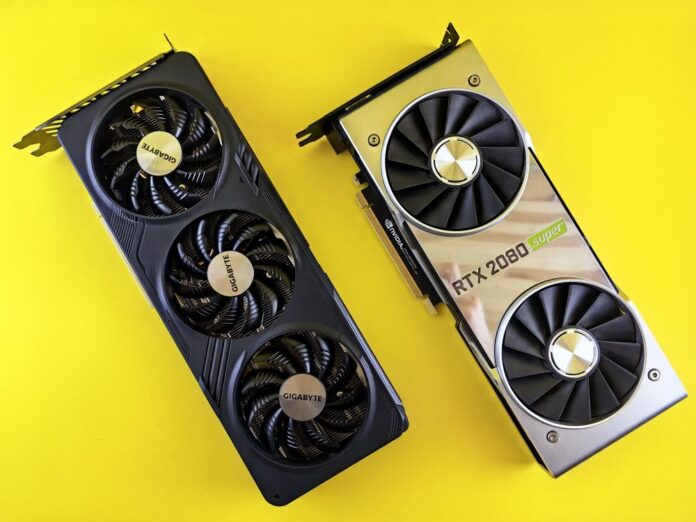
Few companies have become as closely associated with the artificial intelligence revolution as NVIDIA. Its graphics processors have become essential components in the data centres used to train and operate advanced AI systems, making the company one of the most important suppliers in the global technology industry.
But NVIDIA is more than a chip manufacturer. Its hardware, software, networking technology and developer ecosystem have helped establish a powerful position in the infrastructure supporting modern AI.
For investors, this creates an interesting question: how much future growth can NVIDIA sustain, and how much of that success is already reflected in its share price?
Understanding the company requires examining its financial performance, competitive advantages, customers, risks and valuation. NVIDIA’s growth has been extraordinary, but its future performance will depend on whether demand for AI computing continues to expand and whether the company can defend its position as the market evolves.
Understanding NVIDIA’s Business
NVIDIA was originally best known for graphics processing units, or GPUs, used in gaming computers. GPUs are designed to perform many calculations in parallel, making them useful for rendering graphics and handling other computationally intensive tasks.
That capability also makes them particularly effective for many AI workloads. Training large AI models requires enormous amounts of computation, while operating those models at scale requires powerful infrastructure to process user requests.
NVIDIA recognised this opportunity and developed a broader platform combining chips, software, networking and complete computing systems.
Its main business areas include:
Data centres: AI accelerators, processors, networking equipment and computing systems used by cloud providers, technology companies, governments and businesses.
Gaming: GeForce graphics cards and related technologies for PC gaming.
Professional visualisation: Hardware and software used in design, engineering, scientific visualisation and other professional applications.
Automotive and robotics: Computing platforms and software designed for driver assistance, autonomous vehicles, robotics and physical AI.
The data-centre business is now the company’s dominant revenue source. This concentration means NVIDIA’s financial performance is increasingly connected to the spending decisions of a relatively small number of very large technology customers.
Financial Performance: Growth on an Extraordinary Scale
NVIDIA’s recent results illustrate the scale of the AI infrastructure boom.
For its fourth quarter of fiscal 2026, which ended on January 25, 2026, NVIDIA reported revenue of $68.1 billion, an increase of 73% compared with the same quarter a year earlier. Full-year revenue reached $215.9 billion, up 65%.
The momentum continued into fiscal 2027. In the second quarter, which ended on July 26, 2026, NVIDIA reported revenue of $96.2 billion, up 106% year over year. Data-centre revenue reached $89.0 billion, an increase of 117%.
The company reported a GAAP gross margin of 75.0% for that quarter. Gross margin measures the proportion of revenue remaining after the direct costs of producing and delivering products, before operating expenses and other costs are deducted.
These figures demonstrate both strong demand and significant pricing power. NVIDIA has been able to sell increasingly sophisticated computing products while maintaining high gross margins.
However, investors should not assume that growth rates of this magnitude can continue indefinitely. As revenue becomes larger, maintaining triple-digit growth becomes progressively more difficult. Competition, customer spending patterns, manufacturing costs and changes in product demand could all affect future results.
Source: NVIDIA’s fiscal 2027 second-quarter results.
Why NVIDIA Has Become So Important to AI
NVIDIA’s competitive position is built on more than the performance of its individual chips.
Its GPUs are supported by CUDA, a software platform that allows developers to use NVIDIA hardware for general-purpose parallel computing. Over many years, developers, researchers and businesses have built tools, libraries and workflows around this ecosystem.
This creates switching costs. A business considering alternative hardware may need to adapt software, retrain staff, optimise applications and test performance before making a change. Even if a competitor offers an attractive chip, the total cost of moving an established AI workload may be significant.
NVIDIA also sells networking technology, systems and software that help connect large numbers of processors into computing clusters. For major AI applications, the performance of the complete system matters just as much as the performance of an individual chip.
This broader approach helps explain why NVIDIA has been able to establish such a strong position in AI infrastructure.
Nevertheless, competitive advantages are not permanent. Rival chipmakers, cloud providers and large technology companies are investing in alternatives. NVIDIA must continue to improve performance, energy efficiency, software support and the economics of running AI workloads to maintain its position.
The Data-Centre Boom: Opportunity and Concentration Risk
The construction of AI data centres has become one of the most important drivers of NVIDIA’s growth.
Major cloud providers and technology companies are investing heavily in computing infrastructure to support AI assistants, search, coding tools, recommendation systems, enterprise applications and advanced AI research.
These investments create demand for accelerators, networking equipment and complete computing systems. NVIDIA benefits when customers choose its platform to build or expand their infrastructure.
But there is an important distinction between spending on AI and earning an attractive return from AI.
Technology companies may continue investing if they believe advanced computing will become strategically essential. However, if AI products fail to generate sufficient revenue, or if the financial benefits take longer to materialise, customers could slow their spending.
This is a central risk for NVIDIA. Its sales depend partly on the capital expenditure plans of other companies, and those plans can change as business conditions and expectations evolve.
Investors should monitor not only NVIDIA’s own revenue, but also the investment plans and financial performance of its major customers. Strong demand today does not guarantee that current spending levels will be maintained indefinitely.
The Shift from Training to Inference
An important development in AI is the growing importance of inference.
Training involves developing an AI model using large amounts of data and computation. Inference occurs when a trained model is used to generate answers, write code, analyse documents, recognise images or perform other tasks.
As AI applications reach more users, inference can account for a substantial amount of computing activity. The economics of inference are different from those of training because companies must balance performance, latency, energy use and the cost of serving large numbers of requests.
NVIDIA’s opportunity is to supply hardware and systems for both activities. Its challenge is that inference workloads may be more cost-sensitive, creating opportunities for specialised chips and alternative architectures.
Cloud companies are also developing their own processors. Google’s tensor processing units and Amazon’s Trainium chips, for example, provide alternatives for particular workloads within their respective ecosystems.
If these alternatives become more competitive, NVIDIA may face pressure on pricing or lose some customer demand. On the other hand, if AI usage expands rapidly across businesses and consumer applications, the overall market could grow enough to support multiple suppliers.
The important question is not simply whether AI usage will increase, but which companies will capture the economic value created by that growth.
Competition: NVIDIA Is Not Operating in a Vacuum
NVIDIA has several types of competitors.
AMD is developing competing accelerators and software for data-centre AI workloads. Intel also competes in the wider computing market. Meanwhile, large cloud providers are developing custom chips to reduce costs and gain greater control over their infrastructure.
China presents a different competitive challenge. US export restrictions have limited NVIDIA’s ability to sell certain advanced products into the Chinese market, while domestic companies are developing alternatives.
A Reuters report published on October 13, 2026, citing IDC data, found that NVIDIA’s share of China’s data-centre AI-chip market fell to 34% in the first half of 2026. Huawei’s share reached 28%, while shipments of non-GPU AI accelerators increased significantly.
These figures concern the Chinese market, where export controls and local procurement policies play an unusually important role. They should not be interpreted as a direct measure of NVIDIA’s global market share.
Nevertheless, they illustrate how geopolitical restrictions can create opportunities for competitors and potentially change the long-term structure of the industry.
Source: Reuters, October 13, 2026.
Manufacturing and Supply-Chain Risks
NVIDIA designs its chips but relies on external manufacturing partners to produce them. Advanced semiconductor manufacturing requires specialised equipment, highly sophisticated facilities and substantial capital investment.
This fabless business model allows NVIDIA to focus on chip design, software and product development rather than owning and operating its own leading-edge fabrication plants.
However, it also creates dependencies. Manufacturing capacity, advanced packaging, memory supplies and other components can become constraints when demand grows quickly.
The supply chain is also geographically concentrated, particularly in East Asia. Geopolitical tensions, natural disasters, manufacturing interruptions or changes in trade policy could affect production and delivery schedules.
Investors should therefore consider whether NVIDIA and its manufacturing partners can supply enough products to meet demand, and whether the cost of producing increasingly complex systems will affect future margins.
Valuation: What Expectations Are Built into the Share Price?
NVIDIA’s valuation is one of the most important parts of any stock analysis.
A company can be financially strong, technologically impressive and well positioned in a growing industry, yet still deliver disappointing investment returns if its shares are purchased at a price that assumes too much future success.
The price-to-earnings ratio, or P/E, compares a company’s share price with its earnings per share. A higher P/E generally means investors are paying more for each dollar of current or expected earnings.
For a rapidly growing company such as NVIDIA, investors often focus on forward earnings estimates rather than historical profits alone. They may also examine enterprise value relative to operating earnings, free-cash-flow yield and the company’s valuation compared with its own history.
The difficulty is that future earnings depend on assumptions about AI infrastructure spending, competition, product pricing and operating margins.
A valuation scenario might consider what happens if revenue continues growing quickly and margins remain strong. Another might assume that customers slow their investment, competitors gain market share and growth moderates.
If NVIDIA’s future earnings exceed expectations, its valuation may prove more sustainable than initially assumed. If earnings growth slows more quickly than the market expects, the share price could fall even if the company remains profitable and continues growing.
Investors should use current market prices and up-to-date earnings forecasts when performing these comparisons. Historical growth rates alone are not sufficient to determine whether a stock is attractively valued.
Cash Flow and Capital Returns
NVIDIA’s strong profitability has enabled it to generate substantial cash and return capital to shareholders through dividends and share repurchases.
For fiscal 2026, the company reported returning $41.1 billion to shareholders through buybacks and cash dividends. Share repurchases reduce the number of shares outstanding when they exceed new share issuance, potentially increasing each remaining shareholder’s proportionate ownership of the business.
However, buybacks do not automatically create value. Their effectiveness depends partly on the price at which shares are repurchased and how capital could otherwise have been used.
Investors should also examine free cash flow, which measures the cash remaining after capital expenditure. This helps show how much financial flexibility the company has after funding its operations and investment needs.
For a company at NVIDIA’s scale, even small changes in margins or growth rates can translate into very large changes in absolute earnings and cash generation.
The Major Risks Investors Should Consider
Several risks deserve particular attention when evaluating NVIDIA.
A slowdown in AI investment: Customers may reduce or delay data-centre spending if AI revenue fails to justify the costs.
Competition: Alternative accelerators and custom-designed chips could reduce NVIDIA’s market share or pricing power.
Export controls: Restrictions on advanced semiconductor exports may limit access to certain markets and encourage customers to adopt local alternatives.
Customer concentration: A relatively small number of large cloud and technology companies account for substantial AI infrastructure spending.
Supply-chain constraints: Manufacturing, packaging and component shortages could affect product availability and costs.
Valuation risk: A high valuation can leave shares vulnerable when results fall short of expectations, even if the business remains strong.
Technology transitions: Future AI systems may use different combinations of chips, memory, networking and computing architectures. NVIDIA must adapt as workloads and customer needs evolve.
These risks do not necessarily mean the company will perform poorly. They identify the factors that could change its future earnings and the value investors place on those earnings.
What Investors Should Watch Next
A balanced assessment of NVIDIA involves following several indicators over time:
- Data-centre revenue growth: Is demand continuing to expand, and how much is coming from new customers and applications?
- Gross margins: Can NVIDIA maintain strong profitability as products become more complex and competition increases?
- Customer spending: Are major cloud providers continuing to invest, and are their AI businesses generating returns?
- Competition: Are AMD, custom cloud chips and other alternatives gaining meaningful adoption?
- China exposure: How are export controls and domestic competitors affecting sales opportunities?
- Free cash flow: Is the company converting accounting profits into cash while funding its operations?
- Valuation: What level of future growth is already reflected in the current share price?
NVIDIA’s investor relations website provides quarterly results, financial statements and company announcements. Its SEC filings also contain detailed information about risks, customer concentration and export restrictions.
Conclusion: A Leading Company Facing High Expectations
NVIDIA occupies a central position in the AI infrastructure market. Its processors, software ecosystem and networking systems have helped it become a major supplier to the companies building modern AI services.
Its recent financial results demonstrate exceptional growth, strong gross margins and substantial cash generation. At the same time, its future depends on continued customer investment, technological leadership and its ability to defend its position against competitors.
The most important distinction for investors is between the quality of the company and the value of its shares at a particular price. NVIDIA may continue to play an important role in AI while its growth rate, margins or valuation change considerably over time.
A careful analysis therefore considers both the opportunity and the uncertainty. Investors who understand the company’s financial performance, competitive advantages, customer spending patterns and valuation assumptions will be better equipped to make their own assessment of the stock.
The decision to invest, hold or avoid the shares ultimately belongs to each investor. The purpose of this analysis is to provide a framework for that decision, rather than to recommend a particular course of action.

